Showing posts with label school. Show all posts

Saturday, September 6, 2014

Woman says school guard played racist prank on son with Down syndrome

From The Times Herald Record:
A black New York woman says a white school security guard forced her 12-year-old son with Down syndrome to pose for a photo in a way that made it look like the boy was being frisked.
Brandiss Pearson's complaint has led Syracuse school officials to suspend the guard.
Pearson tells The Post-Standard of Syracuse the racist prank happened on Tuesday, the first day of school.
Pearson says she and son Brandon stopped in a hallway to snap pictures. She says the guard turned Brandon to face the wall and lifted Brandon's hands above his head on the wall, as if to be frisked. She said the security guard was laughing and said: "Now take the picture. He's in the right position."
The employee is suspended while the district investigates.

Sunday, June 1, 2014

DSR Episode #27: Inclusive Practices with Michael Remus

DSR Episode #27: Inclusive Practices with Michael Remus
Michael Remus is an expert on inclusion.  He is a parent of two children with special needs.  He has been a teacher and has written several books.  But most importantly (to me anyway), he took an entire school district into the world of full inclusion in 5 years.  Not only that, but it is showing great results and he has the data to prove it.  Michael was a super guest and told us lots of important information we can use to better the education of our children.  What a resource for the rest of us!
We learned about what inclusion means.  Inclusion means including EVERYONE in the main classroom.  However, some children will require additional support (modifications and/or accommodations).   This means that your child may need extra help in the classroom.  It may also mean that your child will work from modified materials while in the classroom.  It DOES NOT mean throwing a child in the classroom without the proper supports.

Tuesday, April 15, 2014

Clarissa Serna Surprises Children On World Down Syndrome Day

by Caroline Flores from KRISTV.com NBC 6:
CORPUS CHRISTI - The kiddos with Special Needs at The Rise School got a special surprise on World Down Syndrome Day. Local singer and "The Voice" contestant Clarissa Serna stopped by to have some musical one-on-one time with the children.
The rise school is a school for toddlers and preschoolers who have developmental disabilities. The children attending the school have disabilities ranging from Autism to Down Syndrome.
On this special day the children sang, danced, and made some beautiful music with Serna.
Serna has worked with The Rise School in the past performing at fundraisers for them. She says these children and this school have a special place in her heart.
"I used to babysit a child with Down Syndrome and he was just so amazing. They're really, really smart very beautiful children," said Serna.
The Executive Director of the school says to have Serna singing with the children is special... Because no matter what the disability...music is the one thing they all connect to and love.
"To have this experience with the kids, we'll never forget it. It's going to be a memory we will always have," said Andrea Elizondo The Rise School Executive Director.

Sunday, January 26, 2014

Rival teams come together for player with Down syndrome

from CBC News:
Cross-town school rivals in Charlottetown came together last week to give Cameron Gordon, who has Down syndrome, his first shot at basketball glory.
"It feels awesome," said Gordon.

"Like I'm super famous."

Gordon is a student at Birchwood Intermediate School, and decided this year he wanted to try out for basketball. His mother, Catherine MacInnis, had her doubts about whether he would make the team.

"It certainly has been challenging," said MacInnis.

"There are things he's wanted to do that he hasn't been able to do."

Gordon's disability makes it difficult for him to compete on skill, but when it comes to spirit, he brings something to the gym everyone on the team wanted.


Tuesday, December 10, 2013

A boy with Down syndrome just might just be his football team’s MVP

by Kristie Smith from Dallas News:
Bill and Sandie Wood waited anxiously on the delivery of their son, Chase, 15 years ago. Chase’s older brother, Austin, was also excited for his younger brother to arrive.
None of them saw it coming when the doctor walked into the room and informed them that their child had Down syndrome. Down syndrome is a genetic condition that causes delays in physical and intellectual development.
“We were clueless,” Sandie said. “I had never heard of Chase’s condition. I did not realize how much help I was going to need and thought I could do it on my own but quickly realized that was not the case. Thank God for DSG — Down Syndrome Guild.”
DSG is a group of parents who help others who have children born with disabilities.
Now, 15 years later, Chase has grown to 5 feet 9 inches and is 168 pounds of athletic ability. Since his seventh-grade year, he has been a member of Rockwall ISD’s Williams Middle School Wildcat football team playing defensive tackle. His younger brother, Seth, assists and is one of his strongest supporters.
It was not easy for Chase to be a part of the team. While head coach Kip Muhl was receptive to Sandie’s proposal, he understandably was concerned about safety issues. However, after consideration, the coach agreed to allow Chase to be a Wildcat.

Wednesday, October 9, 2013

School principal drags boy with Down syndrome

ABC-7.com WZVN News for Fort Myers, Cape Coral

Neptune Beach, FL - A mother and father are looking for justice after they say their child was pulled from his classroom by his private school principal and badly hurt.
Meibol and Cesar Suarez adopted their grandson, who has Down syndrome, after his parents were no longer able to take care of him.
They enrolled him in a school for children with learning disabilities, where they believed he would be safely taken care of.
But according to Neptune Beach Police Department, about three weeks ago, the 11-year-old was harshly disciplined in class and criminal charges could follow.
"This is my child. I have to protect my child," said Meibol Suarez.

Wednesday, August 21, 2013

Karrie Brown hopes to dance with Ellen Degeneres

from KSDK News Channel 5:
Karrie Brown's first day of school outfit went viral, resulting in not only thousands of fans but a photo shoot for a national clothing store.
The Collinsville High School Junior has Down syndrome and autism. A self-proclaimed fashion lover and aspiring model, Karrie's favorite store is Wet Seal. Her mother, Sue Brown, posted a picture of Karrie in her brand new threads on the first day of school August 12th and was flooded with responses about how great Karrie looked.

Soon enough, a family friend launched a Facebook Fan page displaying all of Karrie's daily school outfits.
Thousands of people liked the page and within a couple days Wet Seal was calling.
The retailer is flying Karrie out to California next week for a photo shoot.
Karrie is a teen who is constantly giving back to her community. She volunteers at her local YMCA and library branch. She also takes Zumba classes and Hip Hop classes because dancing is her favorite thing to do. Her love of dance has given birth to her ultimate dream -- dancing with Ellen Degeneres -- which has yet to be realized.

Monday, July 15, 2013

Boy with Down syndrome uses iPad to help him communicate


by Courtney Smith from WTVM 9:
AUBURN, AL (WTVM) -
Like many best friends, 7-year-old Hal Bradshaw and Sophie Snyder don't need a lot of words, their bond is rock solid.
Hal has Down syndrome. He began signing as a baby, but verbal words remain a challenge.
"You want the best for your children, you want them to be able to output to the world, not just input," said Hal's mom Samantha Bradshaw.
WTVM.com-Columbus, GA News Weather
Hal began lessons with Kelly Cadden, a speech pathologist at All for Children in Auburn. His family bought an expensive language output device, but it was complicated and Hal didn't like it.
"We knew how much he loved playing games on the iPad, and so we started using it as a way of communication and he liked it and picked it up immediately," said Cadden. "He likes to carry it with him, doesn't like others to touch it, it is his voice, one he didn't have before."

Friday, June 28, 2013

graduate with Down syndrome ready for future


by Phil Gerber from the Observer-Tribune:
Overcoming challenges is nothing new for Timothy Taverna and the 20-year-old Long Valley youth is now on the cusp of one of his biggest challenges.
Taverna, who has Down syndrome,  graduated on Thursday, June 13, from  ECLC, a private, non-profit school formed in 1970 in Chatham for children 5 to 21 with special needs including severe learning or language disabilities, autism spectrum or multiple disabilities.
“It’s been very positive for Tim and for us,” said his mother, Laura. “He cried at graduation. He was bawling his eyes out and it made all of us cry too.”
The graduates all had the chance to address their peers at graduation. The young Taverna spoke about his goal of one day being married and living in Long Valley.
Mrs. Taverna said her son made friends and that his potential was realized and appreciated during his years at ECLC. It wasn’t always that way.
In 2001, the youth was a fourth grader at the Old Farmers School and was preparing to attend the middle school. His years in elementary school were often difficult as there were no other children with whom he could relate.
He enrolled at ECLC in Chatham in 2001, one of 212 children ranging from 5 to 21-years-old and grouped by abilities. And he never looked back as he’s had opportunities that were formerly not possible. He ran for the ECLC student council two years ago, but though he lost, it was an important experience, his mother said.
And he has learned critical life skills like how to buy train tickets and take the train to Summit or to New York City. And there have been weekly experiences that typical children might take for granted, like bowling or going for lunch at Burger King.

Thursday, June 13, 2013

DSR Episode #20: Current Challenges – Ages 2, 4 and 7

In this episode Jason, Mark and Rick each give an update on their child and the current challenges they are facing for their age category.
Dexter, the walking man!
Jason’s Dexter is two years old and is now walking.  What a big milestone walking is! Go Dexter!  Jason has been having trouble finding the right preschool for Dexter.  Unfortunately they have had trouble with schools refusing Dexter based on his disability.  Is that even legal?  The worst one was the school that his older child attends.  That school turned Dex down without even evaluating him.  It seems that Jason and Colette have found a home for Dex now and it is working out, but it did bring them a lot of stress.  So I guess Jason’s big challenges are now related to school, but walking was a big milestone that happens in the 2-3 yr range for our kiddos.  Aren’t they cute when they just learn and they stumble around like drunks?  I love that age.
Luke and the nerds
The Owens Family is working on academics.  What nerds we are!  Luke seems to love letters and we have been pushing reading and writing with the Learning Program, Handwriting Without Tears, TV Teacher, magnetic letters, foam letters in the bath and the iPad.  He seems to be sucking it up.  In fact he just pointed out a typo for me while I was writing this.  We have been facing some school issues.  Our county wants to place him in Kindergarten this year even though he barely makes the age cutoff.  We want to hold him back.  We want him to REALLY be ready when he hits kindergarten where we plan to push for full inclusion! Negotiation with school officials I think will be our big challenge going forward.
Kayla and her court
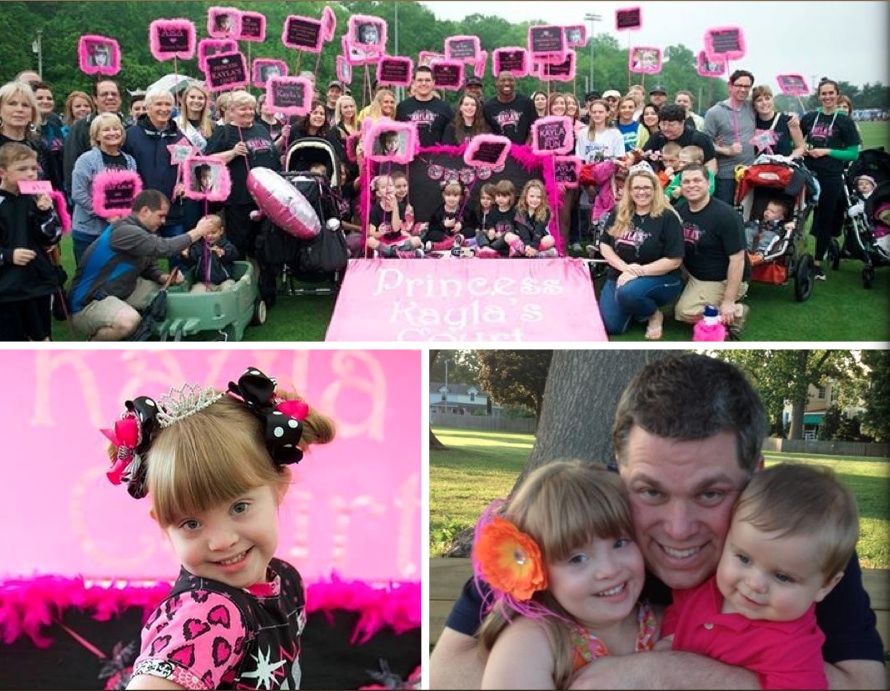
Kayla turned seven years old recently.  Happy birthday, Kayla!  Kayla herself was unavailable for comment but Rick says their ‘current challenges’ revolve around school as well.  Rick’s big thing is communication.  It is important to respond quickly when things aren’t working.  If you put things off and say things like ‘we should just give it another month’, you can quickly miss a whole school year in an sub-optimal environment.  Rick says to keep pushing and go after the things you need.  We also talked about inclusion and what Kayla’s day was like.  Making friends and fitting in is also a challenge.
That’s our episode.  Sorry for the hiatus.  We had two postponements in a row.  One by a guest and one that is all Mark’s fault.  However we have some really great guests coming up so stay tuned!
We are the Down Right Awesome Dads and thanks again for listening!
~Mark~
Download Down Syndrome Radio, Episode #20.
Better yet…subscribe, rate us and leave a comment on iTunes!

Friday, January 11, 2013

Ninth Annual Trisomy 21 Symposium

Ninth Annual Trisomy 21 Symposium
Saturday, March 16, 2013
www.chop.edu/cme

Trisomy 21 is the most frequently occurring chromosomal abnormality, found once every
800 to 1,000 live births. However, both pediatric and adult clinical care continues to
present significant and unique challenges.

Children with trisomy 21 are at higher risk for congenital heart disease, gastrointestinal abnormalities, endocrinologic disorders, epilepsy, musculoskeletal issues that affect motor abilities, hearing loss, speech apraxia, sleep disorders, feeding disorders, and developmental disabilities, including learning disabilities, mental retardation and autism. Deficits in any of these areas can adversely affect the child’s development and adaptive behavior.

This one-day symposium will provide parents and healthcare professionals with up-to-date clinical information, therapeutic approaches and current research being conducted in the field of trisomy 21.

Presentation Summaries:

Dental Management of the Patient with Down Syndrome (Trisomy 21) Angela Stout, D.M.D., M.P.H. - This presentation will discuss various dental characteristics and
anomalies that exist with patients who have Down syndrome and will review tips for the parent and caregiver to maintain good oral health for their child/patient. Several treatment options
and behavior management techniques will be offered to guide and assist the parent/caregiver to get their child/patient through dental examinations and treatment.

Promoting Health and Mental Wellbeing in Individuals with Down Syndrome: Lessons Learned from the Adult Down Syndrome Center of Advocate Lutheran General Hospital Brian Chicoine, M.D. - Dennis McGuire, Ph.D.Drs. Chicoine and McGuire will discuss findings from a multidisciplinary clinic serving the health and psychosocial
needs of over 5,000 teens and adults with Down syndrome in suburban Chicago. They will discuss the interaction of physical and mental health conditions and discuss ways to reduce the risk of mental health/behavioral conditions. They will also discuss health promotion strategies and behavioral characteristics that are adaptive.

Monica Walters Martinez and David Martinez Self-advocates and Stars of the HBO Documentary, Monica & David Moderator: Ali Codina - Monica & David is a documentary that explores the marriage of two adults with Down syndrome and the family that strives to support their needs. Monica and David are blissfully in love and want what other adults have — an independent life. While Monica and David are capable beyond expectations, their parents, aware of mainstream rejection of adults with intellectual disabilities, have trouble letting go.

Sunday, December 2, 2012

Protesters want protection for Hillsborough students with special needs


By Marlene Sokol from the Tampa Bay Times:
TAMPA — With her 9-year-old son Anthony nearby, Theresa Mastella stood outside the Hillsborough County Children's Board headquarters on Thursday, waving a sign that said "Schools should be safe."
Anthony has Down syndrome and, like other parents, Mastella was moved by the news of two deaths this year of special-needs students in Hillsborough County.
"It just brings up all the issues that have been going on for years in the schools," said Mastella, who is active in a Down syndrome support group. "Unfortunately, it took two tragedies to bring it to light."
About 25 other protesters stood with her, including some children. Rhonda Ward, a volunteer advocate whose son has spina bifida, came all the way from Broward County.
Their issues ran the gamut from improved services in the Hillsborough district to state laws that would hold districts more accountable for serving disabled students.
"It's a systemic issue, it's not just here," Ward said. "They make everything as difficult as possible."
The Hillsborough district has a work group studying safety in the Exceptional Student Education program, which serves 29,000 students. Issues include staff training and protocols for moving students from one section of campus to another.
District spokesman Stephen Hegarty said of the protest, "This group is advocating for children and for ensuring the safety of children, and we are interested in all of those things as well. We are hard at work reviewing everything we do."
The district also is investigating the death of Jennifer Caballero, who drowned in a retention pond behind her middle school after wandering away from gym class.
Some of the parents Thursday said Caballero's death affected them on a personal level.
Diane Rodgers, whose 12-year-old son has Down syndrome, spoke highly of his teachers and aides.
But there was one morning when, at 4, her son wound up alone in the bus lane while teachers and aides were occupied. Rodgers said she had lingered at the school and discovered him, by sheer coincidence, before he wandered off.
"Everyone you talk to has a story," she said.
Samuel Felix, 18, said he was sickened by news of the two deaths. He has Asperger's syndrome and plans to take courses next year at St. Petersburg College.
"I believe that all of us were made equal on this earth and should be treated as equals," he said.
The protest coincided with the Children's Board's legislative summit, an event that brings community members together to discuss issues they wish to take to the Legislature.
Pam Iorio, the Children's Board's interim chief executive, said some of the protesters participated in the summit.

Monday, October 8, 2012

Including children with Down’s syndrome in mainstream schools benefits everyone


I was quite relieved last month when it came time for the children to return to school. Finally I could get some respite from looking after my two children - Alexander, seven, with Down’s syndrome, and Robert, four and a half. Although my boys are pretty good on the whole and play together quite well, they need almost constant supervision. Without it, Alexander can have a tendency to hit the TV, chew toys or wee on the floor, so vigilance is required.
One day just before the return to school, I was in the supermarket and I bumped into an acquaintance with two children, who said how sorry she was that the holidays were over and her children were going back to school. I did have to admit that I didn't share her view. Later that day, I bumped into the mother of an autistic child, and we raised our arms to the heavens with relief, and then compared notes on what time we started our first bottle of wine just to get through the day.
Alexander is now in Year 2 and, although the school he attends is very supportive, of course I worry about his progress and the growing gap between him and his peer group.
Alexander has a Statement of Special Educational Needs, and it is specified that he has 20 hours a week of 1:1 support from a teaching assistant. The school provides extra help to make sure he has support for the full day. He had been really looking forward to going back to school and seeing his friends, but it was inevitable that there will be some teething problems as the school has a shared Year 1 and Year 2 classroom, so there is a whole class of new children for Alexander to get to know, and they need to get to know him too.
It may sound awful to say but, for me, one of the worst parts of the day is picking him up, because of the prospect of hearing the teacher say: “I’m afraid Alexander hasn’t had a very good day…” I wait with dread to hear what has happened. Did he hit someone? Has he had more than one wee “accident”? Has he torn the pages from a book?
I am expected, after the event, to try and talk to him about it. In truth the teachers, TAs and I have a good relationship and work together very closely to figure out how to help Alexander get the best from school and to manage any behavioural issues.
I believe that the policy of “inclusion” – educating children with special needs in mainstream schools – is a good one, and for the majority of children with Down’s syndrome it is fairly successful. But it takes a lot of work from a range of people to make it happen, not least the parents.
Each term the school prepares an Individual Education Plan (IEP), which is then agreed by me and the teachers. Later Alexander will be able to comment on it too.
We normally pick three targets with clearly defined outcomes so that it is possible to tell when these have been achieved. From June until they are reviewed again in November, Alexander’s targets are:
  • I will keep my hands to myself when I am sitting with the class on the carpet.
  • I will know that when a collection of counters or objects are moved there is still the same amount.
  • To hold a pencil effectively so that I can write my name.
We talk to him about these targets a little, but generally it is up to the teachers and TAs to follow through with actions to support him. We’ll play it by ear as to when he is actually asked what he would specifically like to work on.
The big event this term will be the Annual Review meeting, in which I meet with the teachers and various other professionals (speech and language therapist, educational psychologist, someone from the Down’s syndrome and Special Educational Needs Service) to discuss Alexander’s progress and set targets for the year. I have to steel myself not to become emotional at the meeting.
But in my opinion, one of the most important reasons for encouraging inclusion is that a whole cohort of children will grow up knowing someone with a disability – there are 45 more children who will go out into the world having experienced learning with someone (usually) less able than themselves, and I hope it will teach them a little bit about tolerance.
It does have its downsides, though. Alexander is seven and, although he has been invited to birthday parties, he has not yet been invited home to play with anyone after school and, frankly, I’m not sure how we would cope if he were, though Alexander has one particular friend who has been to play at our house a couple of times.
So far, the only times we go to other children’s houses to play are to those families I know from before children, or people we met at baby groups, and it is still seen as normal for me to go along for a chat, too.
But what is going to happen when Alexander turns 10, or 12, or older? We all know how important it is to have friends with shared experiences, and the same applies to a child with Down’s syndrome. That is one of the main reasons why many parents opt to send their child to a special school when it comes to secondary education, so that they have more of an opportunity to make friends.
For the time being, I make sure that we spend quite a bit of time with other “DS” mums and their children, to give Alexander an opportunity to make friends, and it has the added bonus of giving me and my friends a chance to let off steam to others who really understand!

Wednesday, September 19, 2012

What you need to know about children with Down syndrome


by Anne Hart from Savannah Now:
When it comes to explaining her son’s Down syndrome to the general public, Wendy Tobiasz’s approach is refreshingly simple and downright honest: Joshua is “more alike than different,” she says.
“A child with Down syndrome is much more like you than different from you,’’ the Wilmington Islander said of her son, a first-grader at May Howard Elementary. “They love their family and friends and want to be loved back. They have things they are great at and things that are hard. They are funny, silly, energetic, naughty and sweet. They get their feelings hurt. They are proud when they accomplish something good. They get into trouble. They want to fall in love, have a job and live independently — and the list goes on and on.”
Which is why it makes so much sense that children with Down syndrome are in mainstream classrooms and playing mainstream sports. Many adults with the condition have jobs and live independently.
“If you feel it, struggle with it or want it, then someone with Down syndrome does, too,” Tobiasz said.
A photo of Joshua, 7, smiling in his karate uniform was among 200 chosen from 1,000 worldwide to appear in the New York City Buddy Walk Times Square video presentation this year. The video presentation will be followed by the NYC Buddy Walk.
The goals of the Buddy Walks — held in 250 cities nationwide in October, including Savannah — are to promote acceptance and inclusion of people with Down syndrome and to positively influence local and national policy and practice.
Despite huge efforts for public education about Down syndrome, Tobiasz said, unfortunately many antiquated stereotypes persist — including that children with DS can’t learn or “do” what typical kids do.
Her son and other children with DS daily shatter those stereotypes.
Joshua’s knack for sports — mainstream karate, basketball, T-ball, soccer — particularly helps to extinguish any misconceptions.
“People with DS are life-long learners,” Tobiasz said. “They may need adjustments in their learning style or to progress at a slower pace, but they can learn and ‘do’ just about anything.”

What parents need to know
In anticipation of the Seventh Annual Lowcountry Down Syndrome Society Buddy Walk Festival in Forsyth Park on Oct. 6, local parents of children with Down syndrome shared what they say parents of a child newly diagnosed with the condition need to know.
“First and foremost, they should be congratulated on their new gorgeous baby,’’ Tobiasz said. “Then they should simply love and care for him or her as any baby needs. The path they find themselves on isn’t the path they expected, but it is a beautiful and magical path. The emotions are overwhelming in the beginning, but rest assured that they will love their baby fiercely.”

Joe Marchese, a well-known local advocate for Down syndrome awareness, treasurer of the Lowcountry Down Syndrome Society and the father of three girls including Ella, who has DS, shared the following tips for parents:
1. Start speech therapy at 3 months old. “I know that they cannot speak, but the muscles needed for speech in the mouth and tongue need to be developed.” Always use a sippy cup with small round spouts.
2. Encourage swinging and spinning during play time. The sensory movements develop connections in the brain.
3. Communicate appropriate stages of development. For example, tell her grandmother that Ella will not walk until she is 3. Then when she walks at 2, it is a great success.
4. Teach your child sign language. Knowing where it hurts is a great help in making it better.
5. Find a doctor who loves all children.
6. Watch Aimee Mullins’ “The Opportunity of Adversity” on TED.com.

7. Stand firm on inclusion.
8. Remember that your child is perfectly made.

And I have to add: Join the Lowcountry Down Syndrome Society, because this group’s enthusiastic, informative and positive families are certain to be a huge support. Contact the Lowcountry Down Syndrome Society at ldssga.org or email jmarchese@ldssga.org

Wednesday, August 29, 2012

High School Students Express Support for Shooting Victim


from CBS Baltimore by Derek Valcourt:
A violent start to the school year in Perry Hall after a student opens fire in the cafeteria.
Derek Valcourt has more on how the students are coping the day after the shooting.
Several hundred students and parents gathered around the flagpole at Perry Hall High School before the start of morning classes for a student organized prayer vigil in honor of the victim, 17-year-old Daniel Borowy.
“I would rather it happened to me than him,” said Kayla Finn.
“I’m praying for him and his family and hoping that he can recover soon and be back to the Daniel that I know he can be,” said Kirsten Elasser.
Some student wore T-shirts in honor of the guidance counselor credited with stopping the gunman.


from CBS Baltimore by Meghan McCorkell:
Seventeen-year-old Daniel Borowy remains in critical condition at Shock Trauma. His school community came together Tuesday to pray for him. Meghan McCorkell has more.
On the first day of school after the shooting, students gathered around the flagpole to reflect on one of their own who’s not here.
“He’s an innocent kid and it could have happened to anyone,” said freshman Kayla Finn.
Borowy was shot in the back when a fellow student opened fire in the crowded cafeteria.
His family released a statement saying, “On Monday, August 27, 2012, our son, Daniel was critically injured on his first day of school. We would like to personally thank school personnel who quickly responded, getting Daniel to safety.”
Just steps from the driveway of the high school is a sign urging the community to pray for Daniel. Many students like Michael Haley are openly showing their concern. Borowy lives right down the street from him.
“He always comes around and he always has a smile on his face,” Haley said.
“He just has an amazing personality. He’s just one of a kind,” said Kristen Elsasser.
Amidst heavy police presence, school officials held classes to bring the students back together.
“Our students have been very eager to talk to their teachers and now rallying around the victim and rallying around the community to help in any way they can,” said Perry Hall High School Principal George Roberts.
That sense of community is helping everyone there heal in the wake of this tragedy.
A Facebook page calling for prayers for Daniel Borowy continues to grow, with support coming in from all over the world.
Perry Hall plans to hold a community meeting sometime next week so students and parents can come together to talk about the shooting.

Sunday, August 26, 2012

Mom still advocating for her son and others with Down syndrome


From the moment Marjorie Sullivan Lee learned her newborn son, Kevin, had Down syndrome she became his advocate.
Dismissing her pediatrician’s suggestion that Kevin be placed in an institution, Lee and her husband, John, decided Kevin would grow up at home with his five older siblings and be part of the community. That wasn’t necessarily the norm in 1960.
Lee battled school officials for years to let Kevin attend a regular school until he became the first person with Down syndrome to graduate from Glenbard East High School in Lombard.
After his graduation, she rejected the idea his only source of employment could be a sheltered workshop. She worked with other parents to start the Parents Alliance Employment Project that, 30 years later, still is finding job opportunities for people with cognitive disabilities.
At age 90, Lee isn’t through. She’s still Kevin’s caregiver and recently published a book, “Bloom Where You Are Planted,” the story of their family and their love for Kevin.
“I have a message to let people realize you can have a good life in spite of being diagnosed with Down syndrome,” Lee said.
She said she believes that message is needed in a society where parents have the option to abort if they learn their child will be born with a disability. She also wants parents who have children with disabilities to realize that, despite the progress, all the problems with providing inclusion aren’t yet solved.
Finally, she emphasizes that people with cognitive disabilities want to be part of the larger community, despite arguments from some quarters they would rather be with their “own kind.”
“I want my son to be part of the normal community, but I don’t believe in working just for my son; I believe in working for other people like him,” Lee said. “I have often rubbed people the wrong way. A lot of people don’t agree with me.”
Lou Brown, professor emeritus of special education at the University of Wisconsin-Madison, said Lee was in the forefront of those working to include people with cognitive disabilities in society when her son was in school.
Madison already was practicing inclusion in its schools, but northern Illinois wasn’t when Lee sought his help and advice.
“She took on the establishment. She was a pioneer. She was tenacious. She was smart,” he said. “She was part of a movement.”

Challenge the norm

When Kevin was born, Lee said she had little personal experience with people with disabilities despite a stint as an administrative assistant at Easter Seals.
“Kevin was a whole new world to me,” she said.
She jumped into that world with both feet. She became part of a group of mothers who contacted other mothers of newborns in the hospital to urge them to take home their Down syndrome babies and love them as their other children. The program led to the founding of the National Association of Down syndrome, with Lee’s husband as its first president.
Lee will have a table displaying her book when the group holds a “Celebrating Down syndrome” conference Sept. 29 in Rosemont.
Her Catholic faith led her to take the stance she did, but even the religious establishment didn’t always get it right, Lee said.
She and her husband rejected a young priest’s offer to give Kevin a private baptism. Instead Lee encouraged a friend to tell everyone in their parish and neighborhood that her newborn son had Down syndrome.
Later, she and her husband worked with a group of other parents to provide religious special education for children who previously were denied access to confirmation and the Holy Eucharist.
Education was an ongoing battle. During Kevin’s formative years in Lombard, he was sent to four or five different schools, all well outside his neighborhood. Only when a federal law that was passed in 1975 emphasized that students should be placed in “the least restrictive environment” were the Lees able to argue successfully — after a two-year appeal process — that their son should attend the neighborhood high school.
Kevin entered Glenbard East High School at age 17 and graduated four years later in 1982.
Being around peers his own age led Kevin to assert more independence, Lee said. He began choosing his own school lunches and pushed the plaid pants his mother had bought for him to the back of the closet. Lee rejoiced in her son’s development.
Kevin also joined the high school wrestling team and, despite a lot of bench warming, rode the team bus to other schools and participated in some demonstration matches.
Lee said school administrators who once resisted her insistence that Kevin be part of the regular student population later became supporters of inclusion.
“Eventually over the years, people suddenly were on the same team as me,” she said.
Kevin’s graduation from high school brought new challenges. A Special Education Parents Alliance she and her husband helped create started focusing on finding employment opportunities for young adults, and eventually changed its name to the Parents Alliance Employment Project.
Lee served as the unpaid program director for six years and will be honored as the keynote speaker when the Lisle-based group celebrates its 30th anniversary in October. Brown said the Parents Alliance Employment Project helped serve as a model for other programs.
“What they did there was influential all over the country,” he said. “She (Lee) doesn’t really know the effect she’s had on other people locally and nationally.”

Views on inclusion

Jane Hodgkinson, the former executive director of Western DuPage Special Recreation Association, served on the Parents Alliance Employment Project board for 16 or 17 years.
She laughs when she recalls how Lee asked her to join. A proponent of full inclusion, Lee considered the special recreation programs WDSRA offered a type of segregation.
“I just want you to know I don’t agree with what you do, but your constituents really like you,” Lee told Hodgkinson.
Hodgkinson said when the fledging organization needed a desk, the Lees might take one out of their own home, and on a few occasions paid the one staff person out of their own pockets.
“Marjorie was absolutely the driving force for the board,” Hodgkinson said.
She and Lee became friends, although they never reached an agreement on their views of inclusion. Hodgkinson said parents should decide when inclusion is appropriate for their children, and sometimes separate activities give children with disabilities opportunities they would not have otherwise.
“In Marjorie’s quest to find Kevin only inclusive activities, it’s held him back,” she said.
But Hodgkinson has never doubted Lee’s love for her son. She admired the Lee family’s togetherness and said she held up Lee as an example to other parents of how to be advocates for their children.
“She is a remarkable woman,” Hodgkinson said. “She is not waiting for anything. She is still going to be an advocate at her age.”

Life today

Lee and Kevin, now 51, now live in a condo near the College of DuPage in Glen Ellyn and have long taken advantage of its programs. Kevin has a transcript covering 30 years of physical education and individualized reading credits.
Jeanne Madoch, a former adjunct instructor at COD, worked with Kevin in a self-structured fitness program for about a dozen years. Madoch said she met Lee and her husband when they were taking a water aerobics class and Lee began talking about Kevin.
“She’s always searching for more things for him to do,” she said. “She’s a go-getter. She has a cause.”
Although not as outgoing as his mother, Kevin clearly has enjoyed the contacts his COD activities have given him, Madoch said.
“He’s funny. He’s got a real sense of humor. He’s quite the character,” she said.
Paid employment didn’t work out for Kevin, but for the past 20 years he has volunteered one day a week shredding documents at a government agency. He’s traveled independently by plane to visit his siblings in other states and shares housekeeping duties with his mother.
While he doesn’t drive, he’s mechanically adept. When the family had a vacation home in Michigan, Kevin drove the small tractor mower. He’s an expert on the remote controls for the TV, DVD and VHS, and has limited skills on the laptop computer.
After Parkinson’s disease required his father to use a wheelchair, Kevin became adept at folding the chair and assembling the lift that allowed the chair to be loaded in the trunk of the car.
Kevin’s father died seven years ago. Lee said the need to be responsible for Kevin has kept her going, but she is realistic about her own mortality. She said her hope is that Kevin will be able to continue to live in their condo with some support after she is gone.
“He is a good man,” she said. “He has a great deal of empathy for people ... He’s accomplished a lot more than we dared to hope.”
Lee’s book, “Bloom Where You Are Planted,” is available from the publisher at www.Tau-Publishing.com and at Bundles of Books & Gifts, 560 Crescent Blvd., Glen Ellyn.

Thursday, June 21, 2012

A father's quest to make daughter's dreams of fame come true


Emily Foster sings. She plays softball. She hangs out with her sisters, she doesn't get scared on the big rides at the fair, and she likes science class best of all. And like most other 10-year-olds, she has a dream.
Hers is to be famous.
She also has Down syndrome.
When she told her father, Russ Foster, that one day thousands of people would scream her name, he decided to help her reach her goal — or, he figured, as close as they could get. The Melbourne, Fla., dad started a Facebook page for what he calls the Emily Foster "famous" project. He's already got more than 1,000 friends and acquaintances to "like" it.
Russ isn't really expecting fame in the form of thousands of people screaming Emily's name. Instead, he's measuring success based on the number of new people and experiences he can introduce Emily to, and, to a lesser degree, the number of famous people she can meet.
"It's just a dad trying to make his daughter's dream come true," said Russ, who has three other daughters. "I want her to be seen like any other kid, and I guess me creating the project is a way to level that field."
Emily's mother, Amber, initially was wary. She feared people might be mean to Emily.
"It would hurt my heart," Amber said. Thankfully, she said, that hasn't happened.
To be a singer
When Russ first envisioned the Emily Foster "famous" project back in January, Emily noted several activities or achievements for which she could succeed — ballet, medicine, fashion design, zoo keeping, firefighting, and shark hunting, to name a few. But most often she said that she'd like to be a famous singer.
Emily likes to play CDs on a boom box in the bedroom she shares with her 5-year-old sister, Averi. Her favorite artist is Taylor Swift; her favorite song is Swift's "Never Grow Up." Emily strums on a small pink guitar and sings along, working to overcome her speech impediment.
Russ said that chances are slim that Emily will become a famous singer.
"Unless there's some miracle, people aren't going to buy tickets to her concert," Russ said. "My dream would be for her to introduce Taylor Swift at a concert."
Russ managed to make contact with Swift's agent. He said they may be able to arrange something the next time Swift is in the area.
Russ persuaded figures such as actor John Travolta, U.S. Senator Bill Nelson and Dick LeBeau, a Hall of Fame defensive back and football coach, to send Emily autographed photos. She got a part in a local music video. She met the Harlem Globetrotters.
"I didn't realize until later that it was kind of a unique endeavor," Russ said of the project.
"Any time a child, whether or not they have Down syndrome, when they express a dream, parents should be encouraging of that," said Amy Van Bergen, executive director for the Down Syndrome Association of Central Florida.
"There are people with Down syndrome who are famous, who are well-known," Van Bergen adding, citing Lauren Potter, an actress with Down syndrome best known for her role as Becky Jackson on the popular show "Glee."
Of course, the chances of any child becoming famous are slim.
"I don't think (Emily's) chances are any less than a typical child who doesn't have Down syndrome," Van Bergen said.
Emily and her twin, Megan, were born at 33 weeks, rather than the usual 40.
Russ and Amber said they had never thought much about Down syndrome before they had Emily. After, they worried about the possible health impacts.
"I remember sitting and bartering with God," Amber said. "I'm going to care for this child like my other ones. Don't take her away from me."
That's what Russ and Amber say they have tried to do, raise Emily the same as their three other daughters: Megan (Emily's twin), Averi, 5, and Miranda, 16.
Russ said it was helpful that Emily had a twin without a disability; it gave them a benchmark to measure Emily's development. Both girls had attended Manatee Elementary School, but the family decided to withdraw them when they felt that Emily was being unfairly separated from the general education setting.
Emily has responsibilities at home and she is punished if she misbehaves, just like her sisters.
"We treat her like the other kids in the household," Russ said. "She doesn't get any special treatment."
"It's amazing what she does with the barriers others place in front of her."

Tuesday, September 27, 2011

Obama Administration Sets High Bar for Flexibility from No Child Left Behind

from the U.S. Department of Education:

In an effort to support local and state education reform across America, the White House today outlined how states can get relief from provisions of the Elementary and Secondary Education Act—or No Child Left Behind (NCLB)—in exchange for serious state-led efforts to close achievement gaps, promote rigorous accountability, and ensure that all students are on track to graduate college- and career-ready.

States can request flexibility from specific NCLB mandates that are stifling reform, but only if they are transitioning students, teachers, and schools to a system aligned with college- and career-ready standards for all students, developing differentiated accountability systems, and undertaking reforms to support effective classroom instruction and school leadership.

"To help states, districts and schools that are ready to move forward with education reform, our administration will provide flexibility from the law in exchange for a real commitment to undertake change. The purpose is not to give states and districts a reprieve from accountability, but rather to unleash energy to improve our schools at the local level," President Obama said.

Release of this package comes nearly a decade after NCLB became law, and four years after it was due to be rewritten by Congress. NCLB shined light on achievement gaps and increased accountability for high-need students, but it also encouraged states to lower standards and narrow curriculum, focused on absolute test scores instead of student growth and gains, and created one-size-fits-all federal mandates.

Education Secretary Arne Duncan said, "We want to get out of the way and give states and districts flexibility to develop locally-tailored solutions to their educational challenges while protecting children and holding schools accountable for better preparing young people for college and careers."

In recent months, states have led a "quiet revolution" to move beyond NCLB's vision. States have taken the lead in pursuing reform and innovations, including widespread adoption of college- and career-ready standards, development of new assessments, and other reforms in areas including teacher and principal evaluation and support, and turning around low-performing schools.

The ESEA flexibility package announced today, developed with input from chief state school officers from 45 states, will spur momentum across America to implement a new educational system aligned to college- and career- readiness, even as the more comprehensive reforms outlined in the President's Blueprint for Reform await Congressional reauthorization of the ESEA.

This flexibility package was developed under the waiver authority explicitly granted to the U.S. Department of Education under the ESEA, and has been exercised under the previous Administration. The flexibility will begin to have an impact during the 2011-2012 school year and will have increasing impact in subsequent years.

For a fact sheet on the details of the flexibility announcement click HERE.

Wednesday, August 31, 2011

IEP step-by-step guide

IEP Meeting

from disability scoop:

A new guide released Tuesday provides parents with a step-by-step look at how to obtain special education services from their school district.

The 26-page download from Autism Speaks offers a broad overview of the legal rights of parents and students with disabilities and walks through the process of forming an individualized education program or IEP.

The guide was prepared by attorneys at Goodwin Procter for the autism advocacy group, but is written in layman’s terms, using bullet points and flow charts for clarity.

“The IEP process can be daunting, overwhelming and highly frustrating for parents who are trying to ensure their child is getting the appropriate educational opportunities,” said Lisa Goring, vice president of family services at Autism Speaks. “We hope this guide will give families an effective road map that prepares them to make informed decisions and advocate for their child as effectively as possible.”

Though produced by Autism Speaks, most of the information included in the guide is applicable to all students that qualify for special education, irrespective of their diagnosis.

Saturday, August 20, 2011

student with Down syndrome left on bus for 5 hours


Some south suburban officials are calling for the removal of a bus driver who allegedly left a student with Down syndrome on a school bus Tuesday for five hours.

The 19-year-old female student on the Alpha School Bus Co. vehicle was discovered when the bus returned about 1:30 p.m. to a Crestwood terminal.

The student was supposed to arrive at a transition program operated by the Southwest Cook County Cooperative Association for Special Education in Orland Park, school officials said.
The student had apparently drifted to sleep, a relative said.

The student’s grandmother and officials of the Southwest Cook County Cooperative Association and Bremen Community High School District officials want the bus driver removed.

State law requires school bus drivers to walk to the rear of the bus and make a visual sweep, checking for passengers after each route to prevent such incidents.

Crestwood police said the matter still is under investigation.

Bus officials could not be reached for comment.