Showing posts with label therapy. Show all posts

Saturday, May 3, 2014

Down Syndrome children have high IQ, specialist says

DHA chief calls for the need to integrate them into mainstream
from Gulf News:
Dubai: The Dubai Health Authority (DHA) held a campaign to raise awareness about Down Syndrome at the Al Barsha primary health care centre last week.
Down Syndrome is a chromosomal condition, which affects physical and mental development. It is caused by the presence of an extra chromosome.
The event was inaugurated by Eisa Al Maidour, Director-General of the DHA. More than 30 families with children and adults with Down Syndrome took part in the programme.
In the UAE, one out of 319 babies have Down Syndrome. The World Health Organisation (WHO) estimates the incidence of Down Syndrome to between 1 in 750 live births worldwide.
“These awareness initiatives help people understand Down Syndrome better and provide an active platform for people dealing with Down Syndrome to raise their queries.”

Monday, March 31, 2014

Frequency domain analysis of ground reaction force in preadolescents with and without Down syndrome

from Science Direct by Jianhua Wu, Matthew Beerse, and Toyin Ajisafe: 

Highlights
  • We study frequency content of vertical GRF in children with and without DS.
  • Children with DS have a similar fundamental frequency during treadmill walking.
  • Children with DS have a lower frequency at 99% and 99.5% of total power.
  • Walking faster with ankle load helps produce a more typical power spectrum in DS.


Abstract
Children with Down syndrome (DS) display less stable and coordinated gait patterns in the time domain than their healthy peers. However, little is known about whether this group difference exists in the frequency domain. The purpose of this study was to investigate differences in vertical ground reaction force (GRF) in the frequency domain between preadolescents with and without DS. Twenty children at 7–10 years of age with and without DS participated in this study. Participants walked on an instrumented treadmill at two speeds with and without external ankle load. Vertical GRF was collected and the data was processed through a Fourier transform. Frequency content variables included fundamental frequency, power of the first five harmonics, and the frequency and number of harmonics at 95%, 99% and 99.5% of total power. Preadolescents with DS had a similar fundamental frequency as their healthy peers even though the DS group walked at slower speeds. The DS group displayed a different power spectrum of the first five harmonics and had the lower frequency and number of harmonics at 99% and 99.5% of total power. However, walking at a faster speed with external ankle load helped the DS group produce a power spectrum more similar to healthy children. Frequency content of vertical GRF provides additional assessment parameters in functional gait evaluation of children with DS. Treadmill intervention at a faster speed and with external ankle load appears to be clinically promising and needs further investigation.

Sunday, February 9, 2014

Raising A Down Syndrome Child: Parenting Tips

by Asha from BoldSky Limitless Living:
What should I do next? This is the common question that all parents face when their babies get diagnosed with Down syndrome. Parenting a child with Down syndrome is a bit difficult than what we imagine. Down syndrome is a chromosomal condition that results in an amalgamation of birth abnormalities. You have to manage various physical and mental problems while parenting a child with Down syndrome.
For some parents, a routine ultrasound scanning may suggest that you have to expect a baby with Down syndrome. But, for some others, everything will come as a bundle of surprise and shock along with the baby. Whatever it is, face the situation with confidence and hope. Parenting a child with Down syndrome is no more a difficult task with the advance in medical science. Toddlers are at the right age to get trained to acquire many skills that will help them live an almost normal life. Consider them as normal children who need a little more care and support from the parents.
IMPORTANCE OF AN ULTRA SOUND DURING PREGNANCY
Since the responsibility to implement some parenting tips for Down syndrome is completely on you, your task will become a little thornier. Here, we may discuss some easy and effective parenting tips for Down syndrome.
Raising A Down Syndrome Child: Parenting Tips

Saturday, October 26, 2013

Dog helps boy rise above disabilities


by Bill Grimes from Effingham Daily News:
EFFINGHAM — When we last featured George the golden doodle in July 16, 2012, edition, he was just a little puppy getting acquainted with the Iffert family before moving on for extensive training.

George was “hired” by the Ifferts to be a service dog for young Hunter Iffert. Hunter, who was born with Down Syndrome, has multiple disabilities, and his family felt that a service dog would be helpful by the time Hunter started kindergarten this fall.

While George’s training wasn’t quite complete by the time school started in August, he finally came back home this month. And, he’s begun going to school with Hunter at Dieterich Elementary School.

George stayed with the Ifferts for 11 months before traveling to Orem, Utah, in March for service training with Molli Baker, director of training for Noelle’s Dogs Four Hope, a Colorado-based company that has trained dozens of service dogs for children with special needs.

Baker said the training she provided was critical to George’s success as a service dog.

Wednesday, October 16, 2013

Dr. Vellody, the Medical Director of the Down Syndrome Center at the Children’s Hospital of Pittsburgh


DSR Episode #23: Dr. Kishore Vellody!


Dr. Vellody is the Medical Director of the Down Syndrome Center at the Children’s Hospital of Pittsburgh. This guy REALLY understands the medical issues faced by our children!
Because the center that he directs is specialized, he sees an incredible amount of patients with Ds.  This centralized experience is invaluable in correctly diagnosing and treating our wonderful children.  To further brag about our guest, he is incredibly personable and easy to talk with.  He explains the medical science behind several issues during the episode in a very clear and concise manner.
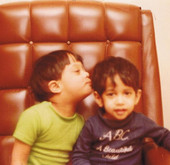
Dr. Vellody has a brother with Ds and a wonderful family with four children!  If you ever wondered what was going on in the picture (at right), it is little Kishore and his brother.  I think the chair was later used for the set of the Brady Bunch.
During the episode we discuss the following medical issues:
  • Heart Surgery – How to choose the right hospital/staff
  • The common cold for those with smaller nasal passages
  • Sleep Apnea – Sleep studies are important!  This can have chronic affects if left untreated.
  • The neck instability thing (Atlantoaxial Instability) – We learned a lot about this
    • It is much rarer than I thought (a few in a thousand)
    • They do x-rays to diagnose it but an x-ray is a poor tool
    • There are symptoms to look for – Dr. Vellody can spot them
    • Don’t worry about it so much, but don’t drop your kid on his head if you can help it.
    • DS Medical Registry
    • Health Supervision for Children with DS – Apparently our kids did come withinstructions!
Dr. Vellody has also started his own podcast to share his medical knowledge (which is how we found him!).  Have you ever left a doctor’s appointment and said to yourself – ‘I just hope I could remember everything he said’?  Wouldn’t it be cool if you could just go to his podcast and hear it all again while you were at the gym or driving in your car?  Well that all possible now.  Here is the link to his podcast in iTunes.  And here is the link to his web page (Children’s Hospital of Pittsburgh).
Thanks for listening!  Remember to go to iTunes and give us a great review and subscribe.  You can also leave us comments on this site!  Have a wonderful DS Awareness Month and a great time at your local Buddy Walk/Step Up event!
~Down Right Awesome Dads
Download Down Syndrome Radio, Episode #23.
Better yet…subscribe, rate us and leave a comment on iTunes!

Wednesday, September 11, 2013

How Down syndrome may help unravel Alzheimer's puzzle

by Linda Carroll from NBC NEWS Today:
Scientists have known for decades that people with Down syndrome were at increased risk of developing Alzheimer’s disease, but they didn’t know why. Some researchers now believe that understanding the connection between the two conditions might help us unravel the Alzheimer’s puzzle and point towards therapies that might slow, or even halt, the dreaded disease.

Visit NBCNews.com for breaking news, world news, and news about the economy

“It’s a tantalizing and provocative question: Do people with Down syndrome hold the key to the mystery of Alzheimer’s development?” Dr. Brian Skotko, co-director of the Down Syndrome Program at the Massachusetts General Hospital in Boston, said in a telephone interview. “And what can we learn from those with Down syndrome that will benefit the rest of the population?”

Tuesday, July 2, 2013

Therapy for boy with Down syndrome 'stopped for weeks'


UK - A five-year-old boy with Down syndrome has had his specialist therapy cut because of staff shortages, his mother has claimed.
Zach Broxham, from Yealmpton, in Devon, is entitled to specialist speech and language therapy.
His mother, Sam, said the service was cut when therapist hours were reduced.
Virgin Care, which runs Devon's integrated children's services, said they were "committed to putting this right".
Ms Broxham said Zach may now need to be taken out of his mainstream school in Plymouth. He has a statement for six 30-minute sessions of therapy per school term.
She said: "He's had two sessions this term and he will not be getting any more.
"They [Virgin Care] have said they cannot provide any more until the end of July.
"If he doesn't get the therapy now, what alternative is there, but a special school?"
'Fully entitled'
Ms Broxham said the service helped Zach to learn his verbs, letters and numbers, so he "could do well in school".
She said the therapist, who worked four-days-a-week before going on maternity leave, was replaced with someone who worked one-day-a-week.

Thursday, June 13, 2013

DSR Episode #20: Current Challenges – Ages 2, 4 and 7

In this episode Jason, Mark and Rick each give an update on their child and the current challenges they are facing for their age category.
Dexter, the walking man!
Jason’s Dexter is two years old and is now walking.  What a big milestone walking is! Go Dexter!  Jason has been having trouble finding the right preschool for Dexter.  Unfortunately they have had trouble with schools refusing Dexter based on his disability.  Is that even legal?  The worst one was the school that his older child attends.  That school turned Dex down without even evaluating him.  It seems that Jason and Colette have found a home for Dex now and it is working out, but it did bring them a lot of stress.  So I guess Jason’s big challenges are now related to school, but walking was a big milestone that happens in the 2-3 yr range for our kiddos.  Aren’t they cute when they just learn and they stumble around like drunks?  I love that age.
Luke and the nerds
The Owens Family is working on academics.  What nerds we are!  Luke seems to love letters and we have been pushing reading and writing with the Learning Program, Handwriting Without Tears, TV Teacher, magnetic letters, foam letters in the bath and the iPad.  He seems to be sucking it up.  In fact he just pointed out a typo for me while I was writing this.  We have been facing some school issues.  Our county wants to place him in Kindergarten this year even though he barely makes the age cutoff.  We want to hold him back.  We want him to REALLY be ready when he hits kindergarten where we plan to push for full inclusion! Negotiation with school officials I think will be our big challenge going forward.
Kayla and her court
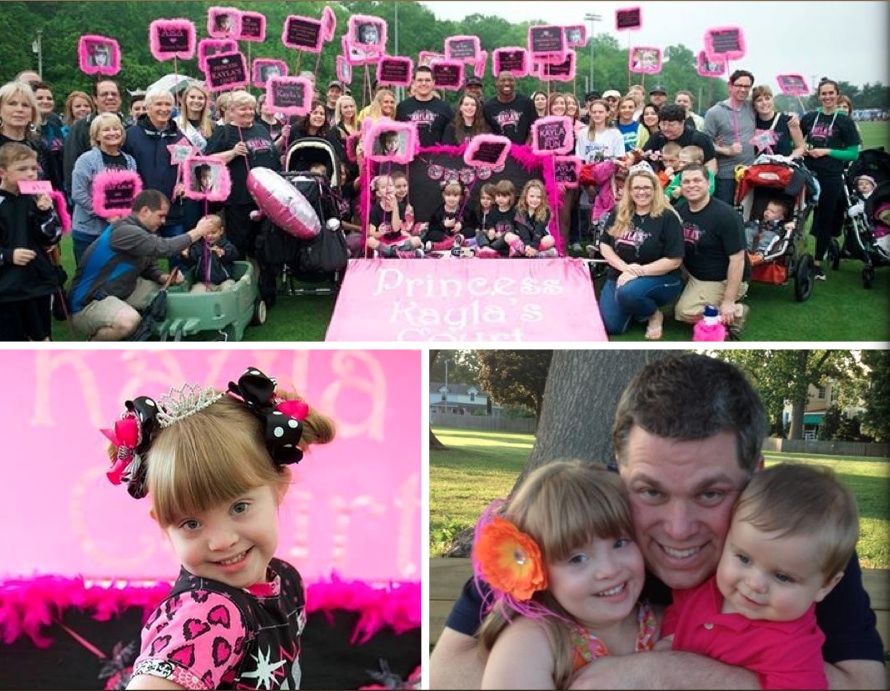
Kayla turned seven years old recently.  Happy birthday, Kayla!  Kayla herself was unavailable for comment but Rick says their ‘current challenges’ revolve around school as well.  Rick’s big thing is communication.  It is important to respond quickly when things aren’t working.  If you put things off and say things like ‘we should just give it another month’, you can quickly miss a whole school year in an sub-optimal environment.  Rick says to keep pushing and go after the things you need.  We also talked about inclusion and what Kayla’s day was like.  Making friends and fitting in is also a challenge.
That’s our episode.  Sorry for the hiatus.  We had two postponements in a row.  One by a guest and one that is all Mark’s fault.  However we have some really great guests coming up so stay tuned!
We are the Down Right Awesome Dads and thanks again for listening!
~Mark~
Download Down Syndrome Radio, Episode #20.
Better yet…subscribe, rate us and leave a comment on iTunes!

Tuesday, March 5, 2013

iPad iPhone app intended to help improve breath support

HotAir is an iPhone/iPad app that was created by a speech and language pathologist who wanted an app that gave measurable results, was fun, and built in repetition, rehearsal, and reinforcement of skills; and a dad of three preschoolers with an intrinsic and irrepressible sense of wonder. The result is an app that will work well as a therapy tool, but is also a whole lot of fun! You may be required to blow leaves off a tree, blow a ball across the screen, etc. and when the goal is met there will be a party effect with confetti and many congratulations.
The app is intended to help improve breath support, but is so fun that you may want to play just for the game itself. It can help build abdominal grading and expiratory volume, control and duration. It can help build breath support for words and phrases. It can be an entertaining adjunct to respiratory therapy. Clients who have had a tracheotomy can use this app as a tool to learn or relearn to use their respiratory mechanism once the trach is removed or a speaking valve is inserted. It can teach the difference between inhalation and exhalation.
It can help teach awareness and control of nasal resonance and emission. It is intended to help improve the S-Z ratio—airflow with and without voicing. The app can be used to teach turn taking, language skills, visual scanning, etc. Or, like many others, you may just want to play the game and enjoy the app!

Saturday, January 26, 2013

Perscription for a Pet PigL "Twinkie" helps boy with Down syndrome


A South Florida family went hog wild, after they were allowed to keep their pet.
"She calms him down when he's very agitated," said Heather Ray. "He does get very agitated easily. She helps as a calming effect to him. She gives him the acceptance that not all special needs people really get in our society unfortunately."
She is six pounds and totally house broken. She uses the kitty litter and is fully equipped with a tail that wags, and now she is an official emotional therapy animal for her pal Kason, who was born with Down Syndrome.
"I think that's the most important thing for me as a mother," said Ray, "To see him get that unconditional love and acceptance."
A dog or a cat were out of the question because Kason's dad has severe allergies. Miniature pigs however are hyper-allergenic.
Two months ago, the fight started at City Hall. "City ordinance does not allow pigs as pets," said City Attorney, Bob Goehrig. "Pigs are considered live stock."
Two months later, the threat of $500 a day fines is finally gone thanks to a doctor's prescription for a Juliana pig, Twinkie can officially stay.

Saturday, November 24, 2012

Living with Down Syndrome


By Christina Kristofic from Philly Burbs.com:
If you ask Kathryn Drenth to tell you about her Down syndrome, she’ll probably pull down her shirt and show you the scar from the open heart surgery she had when she was 6 months old. Her mother immediately will make her cover up and say, “Remember what we said about privacy.”
Mariah Drenth-Cormick is trying to stop that demonstration now because she knows it won’t be long before that’s a social taboo.“I don’t think she thinks Down syndrome is any different from the scar on her chest,” Mariah told a class at Delaware Valley College recently.
Seven-year old Kathryn thinks she’s just like other kids her age.
And in some ways, she’s right.
Kathryn has the same energy and excitement for life that other kids her age do. She loves going to Simon Butler Elementary School, where she sits in a mainstream class and studies the same things other second-graders do.
Kathryn loves playing with her classmates at recess or after school. She loves spending time at home with her family, where she might watch cartoons, play games, lead a dance party, read to her baby dolls or fight with her younger brother.
But Kathryn and her classmates are only 7. And Kathryn’s classmates don’t have an extra chromosome that will slow their physical and mental development.
So how much longer will Kathryn be like most of the other kids? When will they outpace her?
Mariah Drenth-Cormick, one of the co-chairwomen of the Bucks County Down Syndrome Interest Group, knows her daughter will always be behind other kids.
But she doesn’t know by how much.
Mariah said the geneticist at The Children’s Hospital of Philadelphia who officially identified Kathryn’s condition a few days after she was born told her that Kathryn would not be able to do basic problem-solving tasks. The example the geneticist gave Mariah, which she gave the students at DelVal was: If someone told Kathryn to take the elevator to the third floor of a building and use it again to get back to the first floor, and a fire broke out somewhere in the building, Kathryn would not know to take the stairs and would insist on waiting for the elevator to get out. But Mariah knows that’s not true of her daughter.
“This girl can connive anything out of anyone and she has very good negotiating skills,” Mariah said.
Mariah is letting Kathryn show her — and others — what Down syndrome is.
As one of the co-chairs of the Bucks County Down Syndrome Interest Group, Mariah represents about 160 families of children with Down syndrome in Bucks County. She regularly takes Kathryn to meet women who are pregnant with or just gave birth to babies with Down syndrome, so the women can “see what a kid with Down syndrome looks like, what they can do and can’t do, how they bend in half.”
The visit to DelVal was the first time Mariah took Kathryn to speak to a college class.
“I just want to create the normalcy about it,” she said.
“Yes, it’s an extra chromosome. It’s not that scary. I think when people hear Down syndrome, especially older people, they have a preconceived notion that you put the child in an institution. We have special education, an IU, so many wonderful supports in place... Kathryn is only one grade-level behind. She can do everything on the playground except for the really high monkey bars. I can’t do the really high monkey bars. She’s just had such an awesome team and support that has helped her succeed.”
Kathryn crawled at 10 months and walked at 2 years old — later than most kids.
She started occupational therapy, physical therapy and speech therapy as a toddler, so she is more advanced than some other kids her age who have Down syndrome. Mariah said she knows other children in the area who have Down syndrome who have to go to another school that offers more support for them.
Kathryn’s condition means she has trouble reading and writing some words her mainstream classmates already have mastered. Her speech isn’t as clear as theirs. And because she has low muscle tone and control, her handwriting is bigger and sloppier.
So she gets extra help each day from therapists and learning support teachers.
The other kids in her mainstream class, who might know that Kathryn is different, don’t treat her like she is.
“This group of second-graders is one of the kindest groups I have ever met. There is this genuine respect the kids have for each other,” said Susan Zubak, Kathryn’s second-grade teacher. “And Kathryn is a bit of a celebrity at times in here. Kids will actually go out of their way to have the opportunity to read with Kathryn.”
Being part of a mainstream class is good for Kathryn’s growth and development, Zubak said, because it gives Kathryn the opportunity “to come in and see some higher-level thinking skills going on and model herself off what she sees going on in the classroom.”
The kids in the mainstream class learn from it, too. Rebekah Detweiler, Kathryn’s learning support teacher said, they can get to know Kathryn “and see that everyone’s different and there’s all different kinds of people.”
And then, Detweiler said, Kathryn and other children with development disabilities can “feel like they’re included with their community of learners.”
Kathryn’s family tries to treat her like a typical child her age and sets high standards for her. Mariah said, “She has boundaries. ‘Here’s what we expect of you in public. Don’t lift your skirt. Sit like a lady.’ “
Some of the other rules: Say “please” and “thank you,” don’t give other people attitude.
Kathryn follows the rules most of the time — as well as any 7-year old can. And her parents remind her of the rules regularly.
“We want her to be an independent person who eventually has a job,” Mariah said. “If we coddle her and do things for her, she’s never going to learn to do things for herself.”
Mariah said she and her family want to see Kathryn have her own home one day and “have any opportunity a typical person would.”
“If she wants to go to college, we’ll find a college that will meet her needs,” Mariah said. “I think she can be anything she wants to be.”
If you ask Kathryn what she wants to be when she grows up, she’ll give you a different answer each time. She told a reporter one day that she wanted to be a teacher. She told the DelVal class she wanted to be a princess.
She has typical 7-year old dreams.

Monday, October 8, 2012

Including children with Down’s syndrome in mainstream schools benefits everyone


I was quite relieved last month when it came time for the children to return to school. Finally I could get some respite from looking after my two children - Alexander, seven, with Down’s syndrome, and Robert, four and a half. Although my boys are pretty good on the whole and play together quite well, they need almost constant supervision. Without it, Alexander can have a tendency to hit the TV, chew toys or wee on the floor, so vigilance is required.
One day just before the return to school, I was in the supermarket and I bumped into an acquaintance with two children, who said how sorry she was that the holidays were over and her children were going back to school. I did have to admit that I didn't share her view. Later that day, I bumped into the mother of an autistic child, and we raised our arms to the heavens with relief, and then compared notes on what time we started our first bottle of wine just to get through the day.
Alexander is now in Year 2 and, although the school he attends is very supportive, of course I worry about his progress and the growing gap between him and his peer group.
Alexander has a Statement of Special Educational Needs, and it is specified that he has 20 hours a week of 1:1 support from a teaching assistant. The school provides extra help to make sure he has support for the full day. He had been really looking forward to going back to school and seeing his friends, but it was inevitable that there will be some teething problems as the school has a shared Year 1 and Year 2 classroom, so there is a whole class of new children for Alexander to get to know, and they need to get to know him too.
It may sound awful to say but, for me, one of the worst parts of the day is picking him up, because of the prospect of hearing the teacher say: “I’m afraid Alexander hasn’t had a very good day…” I wait with dread to hear what has happened. Did he hit someone? Has he had more than one wee “accident”? Has he torn the pages from a book?
I am expected, after the event, to try and talk to him about it. In truth the teachers, TAs and I have a good relationship and work together very closely to figure out how to help Alexander get the best from school and to manage any behavioural issues.
I believe that the policy of “inclusion” – educating children with special needs in mainstream schools – is a good one, and for the majority of children with Down’s syndrome it is fairly successful. But it takes a lot of work from a range of people to make it happen, not least the parents.
Each term the school prepares an Individual Education Plan (IEP), which is then agreed by me and the teachers. Later Alexander will be able to comment on it too.
We normally pick three targets with clearly defined outcomes so that it is possible to tell when these have been achieved. From June until they are reviewed again in November, Alexander’s targets are:
  • I will keep my hands to myself when I am sitting with the class on the carpet.
  • I will know that when a collection of counters or objects are moved there is still the same amount.
  • To hold a pencil effectively so that I can write my name.
We talk to him about these targets a little, but generally it is up to the teachers and TAs to follow through with actions to support him. We’ll play it by ear as to when he is actually asked what he would specifically like to work on.
The big event this term will be the Annual Review meeting, in which I meet with the teachers and various other professionals (speech and language therapist, educational psychologist, someone from the Down’s syndrome and Special Educational Needs Service) to discuss Alexander’s progress and set targets for the year. I have to steel myself not to become emotional at the meeting.
But in my opinion, one of the most important reasons for encouraging inclusion is that a whole cohort of children will grow up knowing someone with a disability – there are 45 more children who will go out into the world having experienced learning with someone (usually) less able than themselves, and I hope it will teach them a little bit about tolerance.
It does have its downsides, though. Alexander is seven and, although he has been invited to birthday parties, he has not yet been invited home to play with anyone after school and, frankly, I’m not sure how we would cope if he were, though Alexander has one particular friend who has been to play at our house a couple of times.
So far, the only times we go to other children’s houses to play are to those families I know from before children, or people we met at baby groups, and it is still seen as normal for me to go along for a chat, too.
But what is going to happen when Alexander turns 10, or 12, or older? We all know how important it is to have friends with shared experiences, and the same applies to a child with Down’s syndrome. That is one of the main reasons why many parents opt to send their child to a special school when it comes to secondary education, so that they have more of an opportunity to make friends.
For the time being, I make sure that we spend quite a bit of time with other “DS” mums and their children, to give Alexander an opportunity to make friends, and it has the added bonus of giving me and my friends a chance to let off steam to others who really understand!

Wednesday, August 1, 2012

Stephanie Handojo: The wonder kid


by Ika Krismantari, The Jakarta Post, Jakarta:
Some people incorrectly believe that people born with Down syndrome cannot function independently or contribute to society, but Stephanie Handojo has shown that she, like every other person born with Down syndrome, is very special, and more than capable.

On the surface, the 20-year-old looks like an average person with Down syndrome, but beneath the exterior that sometimes people judge her on, she is an extraordinary girl. She has plenty of talent and has
already achieved tremendous things.

Her latest achievement is being selected as one of torchbearers in the run-up to the 2012 Olympic Games in London.

The multitalented girl flew to Britain last month to undertake her leg of the torch relay in Nottingham, London. She was chosen from over 12 million candidates from all around the globe to carry the torch, due to her amazing achievements in sport and other fields.

“I am happy and proud to be able to represent Indonesia,” Stephanie told The Jakarta Post in a recent interview at her home in Kelapa Gading, North Jakarta.

Before being selected as one of the torchbearers for the London Olympics, Stephanie had already made Indonesia proud, winning the gold medal in the 50-meter breast stroke at the Special Olympics World Summer Games in Athens, Greece, a year ago – becoming the first Indonesian special athlete to win the competition.

“She is an inspiration to her Indonesian friends because she broke a record. Indonesia had never won in that competition, but after her victory, many of her friends want to follow in her footsteps,” said Stephanie’s mother, Maria Yustina Tjandrasari, who was also present during the interview, of her daughter’s proud moments.

Apart from excelling in sports, Stephanie, or Fani as she is affectionately called, also stands out in artistic fields. She can play the piano very well. In fact, she was included in the Indonesian Museum of Records (MURI) in 2009 for playing 22 songs on her piano, some of them without a musical score.

With all her awards and recognition, Fani has become a great example for children with Down syndrome.

Medical experts define Down syndrome as a genetic condition, in which a person is born with an extra chromosome. As the result, children with this condition suffer delays in physical and emotional development. But Fani has managed to overcome these limitations, and many other obstacles, to become a very high achiever. In addition to that, she is also a simple, sweet, lovable and good-mannered girl – she greeted us very warmly when the Post came to interview her at home.

Fani is living proof that children with Down syndrome can live a normal life and, beyond that, do plenty of great things that not only make their families proud, but their country as well.

However, as with all achievements, it takes a lot of work and dedication to get there. Fani would not have achieved so much had it not been for the continuous support she received from her mother, Maria. She is a wonderful woman who encouraged, supported, and challenged her daughter every step of the way. It was her mother that first encouraged Fani to swim and play the piano.

“It was by accident. A book I was reading at the time said that children with Down syndrome should be given stimulation as early as possible, and I chose swimming and music because they are good for stimulating both the mind and body,” explained Maria.

Maria, who gave up her career after discovering that her first child was born with Down syndrome, said she designed a special program with specific goals for Fani, without the assistance of any doctors or therapists.  The former badminton athlete said she designed the program after reading a number of books on the subject.

Under her guidance, Fani’s developmental timeline was equal to that of any other child. For instance, she could walk at the age of 1.5 years, and was able to read at 5 years. These things were considered great achievements for children with Down syndrome.

These encouraging signs led Maria to enroll Fani in an average school, not one for children with disabilities. Fani attended classes with children without learning disabilities from elementary school all the way to high school.

“It was not easy on us, because people who did not understand that children with Down syndrome are just like other children, would say or do inappropriate things, and people did not want to accept us, but we persisted,” the mother of three said.

Despite all her dedication and persistence, Maria humbly says that she has only supported her child in living a normal and full life.

“Fani herself was a very determined child. She has a tremendous spirit and enjoys learning,” Maria said of her lovable daughter.

Apart from what her mother says, other people also notice Fani’s determination to live a full life based on her daily activities – not a day goes by without her being involved in sport, or other kinds of lessons or activities.

Her schedule will become even busier soon, as she plans on taking cooking lessons with her mother. “I want to become a chef, and I am now learning how to cook. I recently made a chocolate cake with my mother,” said Fani, sharing her adventures in cooking with an excited and happy expression.

And after graduating from a tourism vocational high school earlier this year, Fani has been running a laundry business too, which was established by her mother.

Maria hopes that by teaching Fani all types of skills, her daughter can continue to be an independent person in the future.

It seems that, with so many skills and talents, and her strong determination to learn new things, the future is wide open and brimming with possibilities for Fani, the wonder kid.

Saturday, July 14, 2012

NDSC Convention and Live Streaming Schedule


The 40th Annual Convention
Each year, thousands of people from across the globe attend the National Down Syndrome Congress Annual Convention.  For most, it’s to hear the latest information from world-renowned experts.  For others, it’s a great vacation. But, for nearly all, there’s the one-of-a-kind NDSC family reunion feeling that permeates the convention weekend. 
In July 2012 our 40th Annual Convention will be heading to our Nation’s Capitol in Washington, DC. From your house to the White House, it will be an opportunity to share in the  milestones of the last 40 years, advocate for continued progress through a Day on the Hill, and  embrace all individuals with DS as they live the dream.
We hope to see you July 19 -22, 2012 for the 40th Annual NDSC Convention


To commemorate our 40th Annual Convention, the National Down Syndrome Congress invites you to participate in the festivities – wherever you are!
For the first time in Convention history, we are live streaming 17 workshops and sessions from Washington, D.C., this July. Share the experience of “the world’s largest family reunion” anywhere, and learn the latest developments and advancements from the Down syndrome community’s leading voices.
Registration for access to Live Streaming will be available July 2. Access to the recorded videos will be available until June 1, 2013. To register simply click on registration, open an account if you don’t have one and choose the live streaming option.

Tuesday, July 10, 2012

Twins with Down syndrome communicate with sign language while they learn to speak


They received the news in the hospital, soon after the twins were born. They would never forget the words: Down syndrome.
“I said, ‘What will we do?’” the mother recalled. “And he just said, ‘We’ll love them, that’s all.’ And that was the answer.”
So it goes in the home of Trish and Tim Graham, where the meaning of life arrived on June 28, 2007, in the form of two tiny infants, swaddled in pink. The Liverpool couple are raising three children: Timmy, 8, and his sisters, 5-year-old Sophie and Sara, twins born with a genetic disability for which the only known remedy is a loving family.
For generations, children with Down syndrome faced an inability to speak, to ask for a glass of water or the time of day. Through early intervention school programs, the twins have learned a basic sign language, a hand-based vocabulary of essential words. They form sentences and talk to each other, bridging a gap that once could have meant a childhood of solitude.
In this learning process, they’re not alone.
“We knew we would need patience, and hopefully, we will have enough of it,” Trish Graham said recently. “But I think we’re stronger than we ever thought we were.”
The Grahams work for National Grid, both in the downtown Syracuse office, although Tim’s position often requires travel throughout the Northeast. They met in 1996, when he moved to Syracuse, and they married five years later. When their son, Timothy, arrived in 2003, they figured parenthood would follow a normal course. And when Trish became pregnant with twins, they braced themselves for challenges that, in retrospect, seem minor.
Down syndrome results from an extra copy of one human chromosome. Every year, the developmental disability affects about 5,000 newborns in the United States. A century ago, most would die before adolescence. Today, they survive to advanced ages and enjoy meaningful lives.

Today, her group — a loose membership of about 180 families — dispenses up-to-date information and helps connect parents to preschool programs that will become critical to their lives. Her son volunteers at the local library or the church. He has friends and family.
“Our son brought us a new perspective on what is important,” Bottego said. “He a bubbly, fun, caring person. ... If you ever met him, you wouldn’t forget him.”
Bottego said the toughest obstacle for Down syndrome families is often having to fight for their child with cash-strapped school districts that are looking for places to cut costs. Once a child is diagnosed, the parent’s world becomes a nonstop treadmill of tests, applications and paperwork. But the services become a lifeline.
“You pick your battles, and you learn,” Bottego said.

The Grahams speak of their children’s teachers and therapists with a reverence that extends beyond most family-school relationships. They say they’ve been blessed by an abundance of support from the community. The twins spend mornings at Main Street, a North Syracuse Early Education Program that serves 350 preschoolers, with and without disabilities. There, speech therapists teach sign and verbal cues.
“We have children who come here, and they are non-verbal, and later they are able to go into kindergarten, talking. Those are huge changes, and everybody can see that,” said Main Street language therapist Eileen Spillane-Healy. “But then there are the small accomplishments, like two kids using signs to express their thoughts. That’s how I measure success: Do we make changes in a child’s life?”
The act of speaking requires a dexterity that is especially difficult for children with Down syndrome. In recent months, the twins have increasingly showed signs of vocalizing. One day, when Tim picked up Sophie from the Gingerbread House, the daycare program where they spend afternoons, she said “Daddy,” clear as a bell. They viewed it a breakthrough. Another time, she called her sister’s name.
“It’s a glimmer of hope,” Trish said. “We’re building on it.”
The parents have learned sign language as well, but they always use words, encouraging the twins to speak.
“You tell them to get the dolly or the blanket, and they’ll get it,” Trish said. “Tim and I are learning as we go.”

The meaning of life. One day at a time.
“Sometimes, you’re just trying to get through the day,” Trish said. “He works full time. I work full time. It’s a lot of stress. It’s a lot of figuring out who’s going here, who’s going there. But we’ve been dealt this hand. All we can do is the best we can.”
“Look, this is not what defines us,” she said later. “Everyone has something going on. Some people take care of sick parents, some take care of sick husbands or wives. We have kids with special needs. That’s all.”
She looked at her husband and smiled. The girls were getting ready for bed.
“I used to say, ‘Wow, a kid with Down, that must be tough,’” Tim Graham said. “Now, I don’t feel sorry for them at all. I know how they love that kid, just as much as anyone else does.
“I think people think, ‘Oh, that must be devastating.’” he continued. “But you just roll up your sleeve, because you love your kids. You learn that what matters with your kid is not what they’re going to be. What matters is whether they will be happy. What matters is that they will love their lives.”
“We have the greatest kids in the world,” he said later. “And I think Trish said it perfectly: Everybody has something. We just happen to have two kids with special needs. These are our kids. This is our lives. We love it.”

Friday, July 6, 2012

she holds the pulse of community in her hand


By Susanne Martin - Bowen Island Undercurrent:
This July, as the Ballymack sets sail from Victoria to Maui, a very special person will come to wave goodbye to Allard Ockeloen: his daughter Emily. Ockeloen is one of the six crew members who compete in the Victoria to Maui International Yacht Race (www.vicmaui.org). They will not only brace the weather and share their experiences in a blog, they are also raising funds for the Down Syndrome Research Foundation (DSRF).


Ockeloen has been living on Bowen Island for 18 years. He and his wife Amanda have two daughters: Emily, age nine, and Olivia (Poppy), age seven. Both girls attend the Bowen Island Community School (BICS).


Emily has Down syndrome and Ockeloen said that she “holds the pulse of community in her hand” as she has strong connections to her friends, teachers and assistants. “Emily is thriving at BICS because they are very attentive to her,” Ockeloen said. “The last time we checked, she knew almost 300 sight words. That is is extraordinary. And of all the kids in her grade, she has borrowed the most books from the library this year.”


Emily’s success is mainly due to the one-on-one attention to foster her ability to read, according to Ockeloen who adds that she started receiving this help in preschool and kindergarten.


“She gets those advantages and reached milestones ahead of others,” he said. “That comes from all her terrific teachers and the people in the community who worked with her in speech therapy and physical therapy.”


Watching his daughter thrive in a public school environment has inspired Ockeloen to make a difference and he was pleased when his Ballymack team members suggested making Down syndrome the focus for their fundraising efforts. He chose the DSRF as recipient for the funds because “it does not only do research, it also puts it into practice” and Ockeloen thinks it is important that the work benefits “people on the ground.”


The foundation (www.DSRF.org) was founded in 1995 to support people with Down syndrome through their lifespan with a variety of programs such as Baby Sign Language, speech therapy and literacy and social development.


“The DSRF is located in Burnaby and Emily has been there a couple of times,” Ockeloen said. “It helps people with Down syndrome and their parents and caretakers a great deal.”


Having a daughter with Down syndrome has also influenced Ockeloen’s professional life. “I’m a developer on Bowen Island and my personal goal is to create assisted living housing for seniors and people with special needs like Down syndrome and autism,” Ockeloen said. “Research suggests that combining seniors and young adults with Down syndrome makes for a very symbiotic assisted living concept.” Ockeloen has a good sense what is required to bring a project like this to fruition on Bowen Island and says that this goes hand in hand with the research of the DSRF.


Ockeloen believes that it is a true gift to know someone with Down syndrome. “Emily is pretty happy in general and we spend lot of time near the water and on the water,” Ockeloen says. “Her favourite thing is swimming and the next favourite thing is to be with us on the boat.”


Ockeloen grew up in the Caribbean. He has been sailing all his life and participated in a number of races but he’s never embarked on a trip that covers a distance of approximately 2308 nautical miles. “This is a big race for me,” he said. It had been Ockeloen who suggested entering the Ballymack in the Vic-Maui Yacht Race. “I raced with the owner of the Ballymack on another boat years ago,” he recalls. “We talked about the boat and I suggested it would be perfect for the race to Maui.” The idea inspired the owner of the Ballymack to scout for a compatible crew. “We all sailed together but never in that particular crew,” says Ockeloen. “We practiced a lot to make sure we get along.”


The Ballymack crew will donate 100 per cent of the funds raised to the DSRF - it has received private donations and accepted corporate sponsorships. “The larger sum sponsors get mentioned on the website,” Ockeloen said, adding that they have already exceeded their goal of $15,000 and are going to continue fundraising through the trip. To support team Ballymack’s fundraising, visit http://dsrf.kintera.org/vic-maui.


The cost for the trip is covered by the owners and crew of the Ballymack. “It’s our pleasure,” Ockeloen said. “It took us two years to put that campaign together and the process has been very rewarding.” Ockeloen is looking forward to the start of the race. “Once you step on the boat, there’s nothing else you can prepare,” he said.


But his family will never be far from his thoughts. To follow the Ballymack’s progress across the Pacific, please see the blog at http://ballymack.blogspot.ca.

Tuesday, June 26, 2012

Gaps in the Map Survey Released by DSAIA, NDSC & NDSS

National organizations partner to help ensure access to support and information 

Down Syndrome Affiliates in Action (DSAIA), the National Down Syndrome Congress (NDSC) and the National Down Syndrome Society (NDSS) have partnered to ensure that all families have access to support and information from a local Down syndrome affiliate through the "Gaps in the Map" Project. The project's goal is to locate and document all Down syndrome support groups in order to identify what areas are not being served and then explore ways to provide that support to the "gap" areas.

We need YOUR help to make this project a success by doing the following:

  1. Complete this BRIEF survey before July 31, 2012 by clicking here.
  2. Forward this newsletter to all your friends in the Down syndrome community nationwide! Encourage them to fill out the survey!
  3. Tweet and share the survey link with other group leaders via social media!
  4. Talk about this project with at least one organization in the Down syndrome community today.
  5. Be creative! The more we share this project, the more families will receive the support and information they deserve!


Stay tuned for a variety of fun and cool ways to share this project with your friends and friend organizations. Click here for all the latest project details or visit us on Facebook!


For more information, contact Deanna Tharpe, DSAIA Executive Director, at director@dsaia.org or 701-425-7129 or Allison Wixted, DSAIA Gaps in the Map Chair, at dsagrstepup@yahoo.com or 804-920-9643.

Tuesday, June 12, 2012

Fluency therapy may improve stuttering in Down syndrome

by Liam Davenport from news-medical.net:
Stuttering among children with Down syndrome may be substantially improved with fluency shaping therapy and parental contingency measures, leading to greater self-confidence, self-esteem, and school participation, suggest Canadian researchers.
Although stuttering is estimated to have a prevalence among children with Down syndrome of up to 48%, there has been little investigation into optimal treatment approaches and outcomes. A number of options have been suggested, including fluency therapy, which has raised concerns among clinicians about its applicability.
To investigate further, Jessica Harasym and Marilyn Langevin, from the University of Alberta, in Edmonton, provided a stuttering treatment program to a girl aged 8 years and 10 months with Down syndrome whose profound stuttering was characterized by part word repetitions, silent and audible prolongations, and had a marked impact on her home and school life.
The researchers devised a treatment program based on the Comprehensive Stuttering Program for Children and consisting of a number of phases: establishment of fluency skills; intensive fluency skill practice; transfer, with fluency skills practised in a wide variety of settings; refinement of fluency skills and home programming; and maintenance and follow up. The child was assessed using a series of speech measures, severity ratings, and self-, parent-, and teacher-reports.
The team reports in the Journal of Fluency Disorders that the child's stuttering decreased from an average of 59.3% syllables stuttered (SS) at pre-treatment to 6.4% SS immediately post-treatment, and 0.8% SS at follow up. Her speech rate consequently increased from 33.4 syllables spoken per minute (SPM) to 149.8 SPM and 182.9 SPM, respectively.
On all measures, the child demonstrated improved self-confidence, self-esteem, and participation following therapy, and improved school participation and performance. However, the child's mother found the demands on the daily home practice challenging, and had concerns about the risk for isolating her other child.
The team writes: "Findings of this descriptive case report suggest that treatments that use a combination of direct fluency-skill training and parent administered behavioural contingencies may be a viable treatment approach for school-age children with Down syndrome and that therapy can be an enjoyable experience."