Showing posts with label mother. Show all posts

Saturday, November 8, 2014

Seeing the light: One mother’s story of raising a child with Down syndrome

by Melinda Carstensen from Fox News:
As a 30-something living in New York City, Gina LeVeque had an exciting career in journalism, a passport with stamps from Italy, and a long-term boyfriend. To an outsider— and even to LeVeque at the time— her life looked picture-perfect.
When LeVeque learned she was pregnant in the fall of 2007, she and her boyfriend celebrated. They talked about getting married and building a family.
But during a doctor’s visit that October, LeVeque— like hundreds of other expectant moms in the United States today— received news that would shake her seemingly idealistic world: Her child, which she had been carrying for about 14 weeks, had Down syndrome.
“You just have this sinking feeling of dread,” LeVeque, now 43, told FoxNews.com. “I had this thing in my head— I don’t know where it comes from— maybe it’s pride: ‘I’m healthy. I went to an Ivy League school. I ran a marathon.’”
When LeVeque recounts receiving the prenatal diagnosis, and the days that followed, the word “fear” peppers her description.

Wednesday, June 18, 2014

A Painful Week in the Down Syndrome Community

from Whoopsie Piggle:
Real Community, Virtually
When Lyra was four months old, I met a woman at a meeting for new parents of children with Down syndrome. A few weeks later, she sent me an invitation to join a Facebook group titled “(’12/’13) Moms with Kids Rockin’ the Extra Chromosome.” I remember thinking the title was a bit cumbersome, but I don’t recall what I expected when I clicked the “join” button. Not much I suspect for, at first, I hardly looked at or commented on the page. I was busy with my family, my baby and her diagnoses of Down syndrome and bi-lateral cataracts and all the adjustments that go along with any new baby. Today, I have a list of all I did not know or anticipate:
  • I thought the group was local, but it is not. Though most members are Americans, the group has families from all over the world.
  • I had not anticipated the value of an immediate and large group of moms whose kids with Down syndrome were the same age as my child and, therefore, will go through the same stages of development at roughly the same times as my child because…
  • It did not occur to me at first that this would be a lifelong group, but once it did I was floored that something like it hadn’t been created before and reminded that, for all its distractions, the Internet’s impact can be profoundly positive.
  • I could not have imagined how close I would become with some of the other moms. Back in the old days, before Facebook, I never participated in chat rooms. Even today, I do not belong to many Facebook groups. Yet there are women I have only met through this group whom I regularly turn to for input. Recently, one of the moms I corresponded almost daily has largely dropped off due to a difficult pregnancy. I miss her as much as if I had a best friend living next door who moved to another state.
  • I did not know how much I could cherish the children who give us reason to have a Facebook group nor how invested I would feel in their developmental milestones. Videos of crawling, walking, talking, straw-sipping babies have me cheering in my seat at my computer as if I was watching the Chicago Cubs win the World Series.
  • I certainly did not expect my heart to be broken.
In the past week, three babies have died. Baby Fiona died after complications from her second heart surgery. Baby Ryder was fine when he went to bed, had a fever and rash in the morning and was gone by two in the afternoon. And Baby Annie. Baby Annie was not given a heart transplant, for reasons that remain unclear, and her family—mother, father, and two older sisters—have watched her progressively become weaker and bluer. She died early this morning.

Tuesday, June 17, 2014

My Two Kids With Down Syndrome and I Found a Place to Be a "Typical" Family

by Stephanie Pratico from The Huffington Post:
Many parents have or will experience the joy of their high school senior receiving college acceptance letters. In my list of dreams for my children, that falls somewhere toward the bottom. When my son John, 20, and my daughter, Sara, 15, were born with Down syndrome, I knew the likelihood of receiving even one college acceptance letter may not be a reality. However, the day John received his letter of acceptance for Team New Jersey in the 2014 Special Olympics USA Games, I believe I experienced the equivalent.
Over the years, I have spent countless hours in doctors' appointments, IEP meetings and on the phone with various State agencies, discussing my children's diagnoses, limitations and challenges. Fortunately, after shedding many tears, I realized early on that although it is important to recognize the areas of development that need support, those are not what define the wonderful people my children are.
Although John was fortunate to reach some of his developmental milestones with minimal delays, Sara's road was much more difficult. John actually learned to walk at 16 months, and Sara was over three years old. In spite of their varying abilities, we were at home at Special Olympics.
Special Olympics is where we go for sports training and competition. My children need to be in a place where despite their disabilities they are among their peers, can have the same experience as any other child and are valued for their special abilities. It is so wonderful to have a place in the community where we can be a 'typical' family.

Monday, June 9, 2014

How One Mother Gave Her Daughter With Down Syndrome the Best Day of Her Life


by David Rosenberg from Slate.com:
When Janice Di Joseph and photographer Lindsay Morris sat next to one another on a train, the two women struck up a lively conversation. Morris said she was drawn in by Di Joseph’s extrovert personality, but it was her daughter Ricchina who immediately caught Morris’ eye.
“She was so dreamy,” Morris recalled. “She had this air about her that was so soft and warm and welcoming.”
Morris was returning from the Look3 photo festival in Charlottesville, Virginia, and had felt empowered by a seminar she took on the photography essay. When Di Joseph, who was heading to Philadelphia where she lives, mentioned she was preparing to throw a surprise wedding-themed birthday party for Ricchina, Morris offered to photograph it and created a series, “Ricchina’s Wedding.”
Ricchina has Down syndrome and as she and Di Joseph began to attend more weddings over the years, Ricchina began to question her mother about why she wasn’t able to get married.  
“I would die whenever she asked, because I didn’t know what to say,” Di Joseph said.
Thanks to Di Joseph’s never-take-no-for-an-answer attitude, Ricchina had already met two of her idols, Justin Timberlake and Lance Bass, encounters Di Joseph felt certain would be the highlights of Ricchina’s life. But as it turned out, the wedding-themed birthday party would top both of those.

Sunday, May 4, 2014

A Dream for My Daughter With Down Syndrome

by The Stir Bloggers from The Stir:
I've debated posting this letter a million times. Mostly because I know I have readers who will not get this. Some readers won't because they love me and my family and Lily so much...they just don't ever want us to hurt. So to prevent that hurt -- or stop it -- they will say things like, "please just accept Lily for who she is. Just give her time, and trust that she is who God made her to be."
Some readers won't get this letter, because... they simply can't relate. As understanding as they might be, they will never ever know how it feels be the parent of a child with special needs. And believe me when I say, I don't blame them for not being able to relate. I'm in a club that I didn't choose to be in myself, although I wouldn't bargain my way out of it if I could.
I've learned too much, loved too much, grown in ways I didn't know I needed to, discovered little rooms...vast rooms...in my heart that I never knew existed since having Lily. I cannot imagine, and I don'twant to ever imagine, life without Lily; this letter has absolutely nothing to do with a lack of love for her or a desire for her to be someone else. She's my Lily, and I truly believe that quote at the top of my blog...the one that says there was no mistake here. I believe it with all my heart.
But there are some days when I dream....

Tuesday, March 18, 2014

15 people with Down syndrome help pregnant mom


from Raquel Villanueva from 9News NBC KUSA:

On February 9, an expecting mother who had just learned her child would be born with Down syndrome reached out to an Italian nonprofit.
"I'm scared: What kind of life will my child have?" the worried mother asked the Coordown organization in an email.
To help answer her question, Coordown teamed up with Saatchi & Saatchiad agency. Together, they interviewed 15 people with Down syndrome from different countries across Europe.
They released the responses on YouTube, in honor of World Down Syndrome Day, which is March 21.
The sweet answers reassure the expecting mother that her future son will "be able to hug" her and that they will one day grow up and have a job and other responsibilities.
"Sometimes it will be difficult," they caution. "Very difficult. Almost impossible."
But then ask "isn't it like that for all mothers?"

Sunday, January 5, 2014

Photographer And Her Daughter With Down Syndrome Collaborate On Beautiful Portraits Of One Another

by Sara Gates from the Huffington Post:
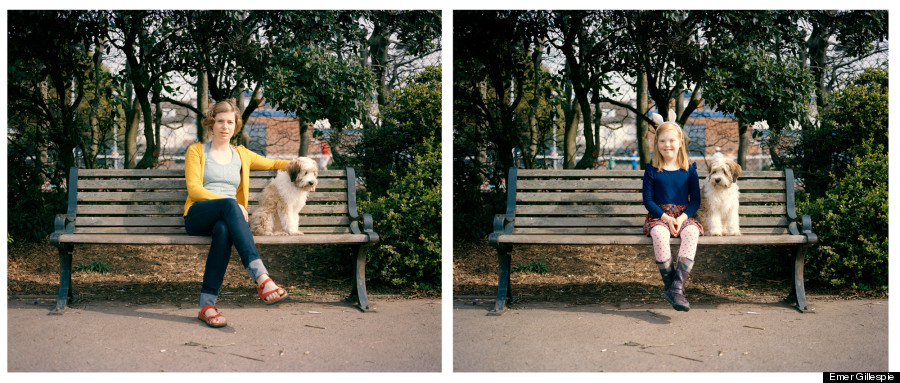
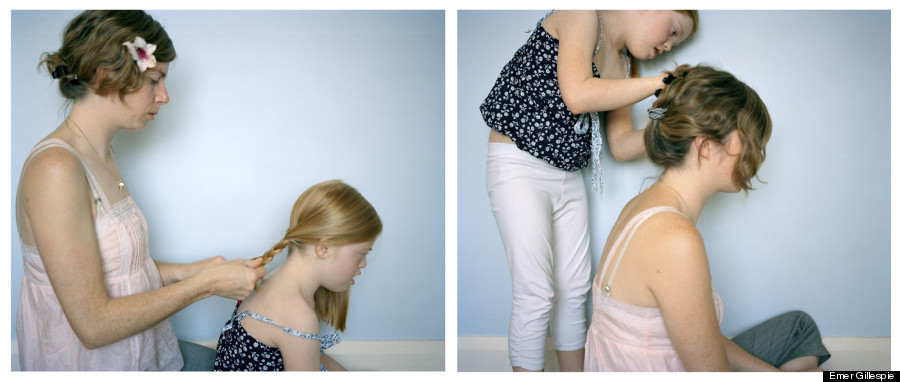
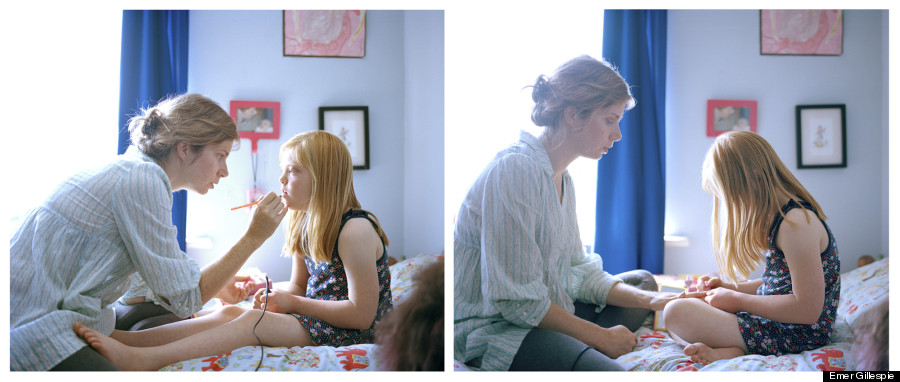
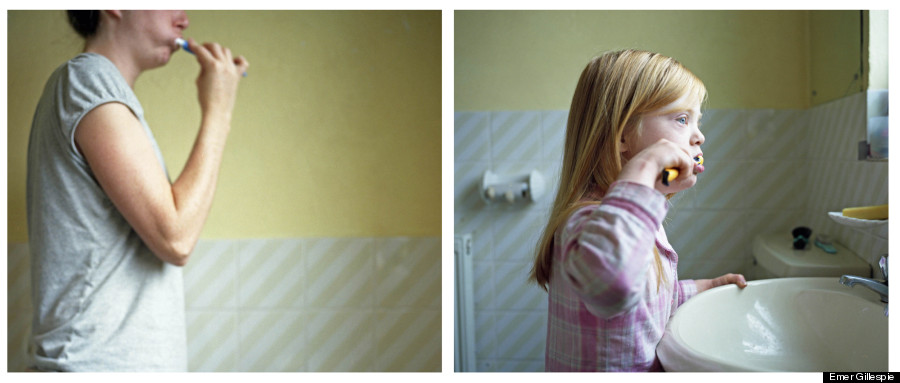
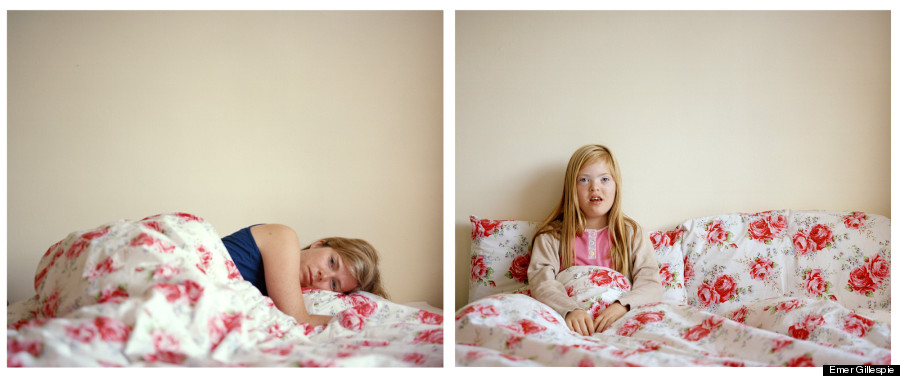
At first, it was Irish-born photographer and mother Emer Gillespie who was behind the camera. But after Laoisha, her young daughter, starting asking to take the photos, she relinquished control.
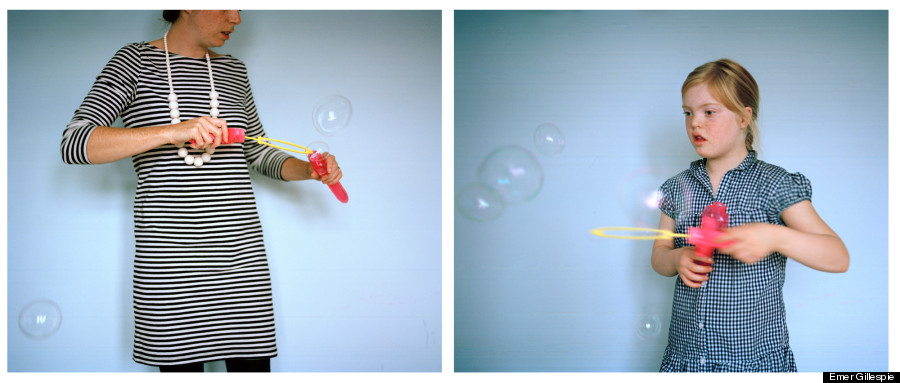
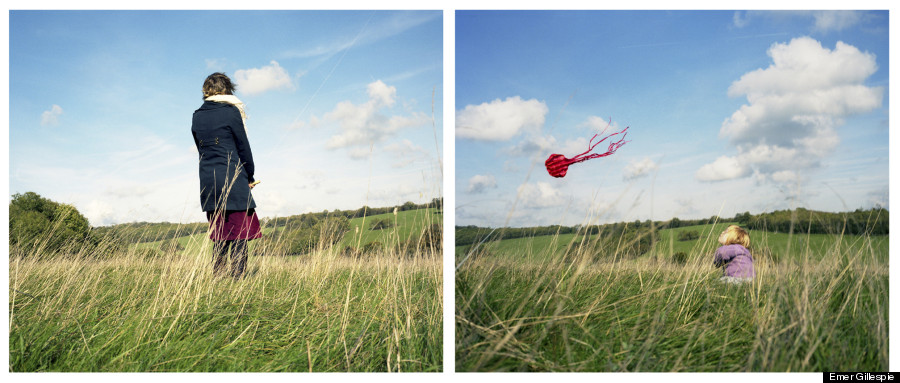
Inspired by Laoisha's interest in the camera, the U.K.-based photographer launched "Picture You, Picture Me" in 2008, when Laoisha was 6 years old. Every few months, Gillespie pulls out the camera and the pair stages scenes of activities they like to do together, such as blowing bubbles or flying kites.
emer 9
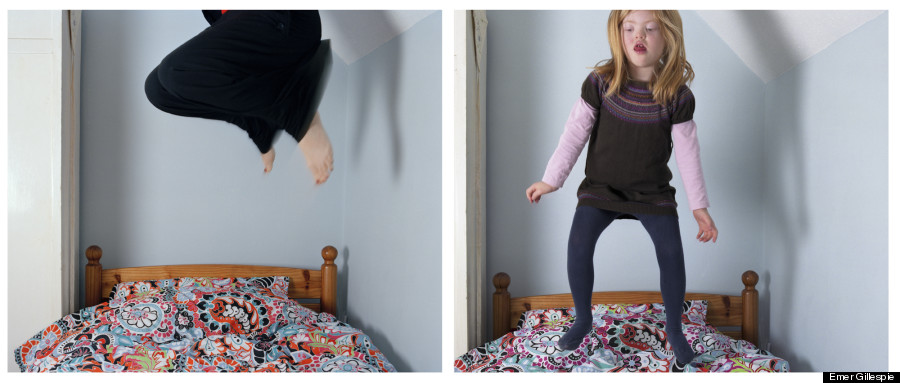
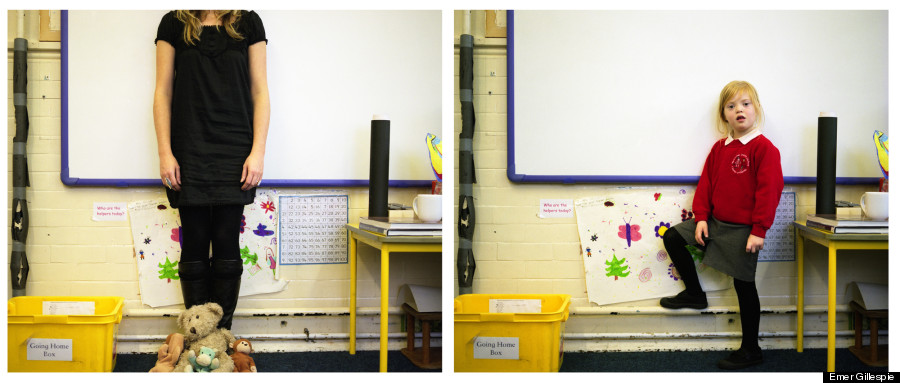
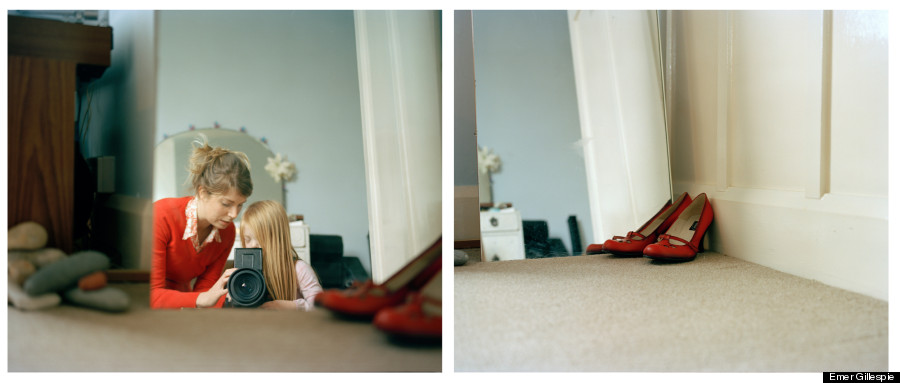
Six years later, the photos they have created together comprise a unique mother-daughter series that features now 11-year-old Laoisha, who has Down syndrome, and Gillespie in parallel scenes, each captured by the other.
emer 3
emer 4
Though the project has been a great way for the pair to spend time together, the photo sessions have also enabled Laoisha to advance her verbal and visual language skills by talking about what she wants for each photo.
"A lot of the images are Laoisha's ideas, for example, 'Bed Jumping,' 'Hair' and 'Make-up,' as she loves those activities," Gillespie told The Huffington Post. "Anyone who knows her will spot her interests and personality shining through in the subject matter. We both make suggestions for shoot ideas, but I will always start by first asking her if she wants to take photos, which so far has always been a yes, and then I will ask if she has any ideas or suggestions."
emer 5
emer 1
emer 8
Other images, like the photo of the mother-daughter duo in a school classroom, came at Gillespie's suggestion.
"Going to her classroom was my idea, as I wanted to take shots in an environment where she was more in control and more comfortable in than I was. So it really does vary from photo session to photo session," Gillespie explained.
emer 7
Usually Gillespie sets up the camera, a Mamiya RB 67, since it's a bit complicated, but she has begun teaching Laoisha the basics.
"I have been trying to teach her the light meter and how to load the film, so hopefully in time she will be able to operate the camera herself," Gillespie said.
emer 2
However, the camera does not focus itself automatically, so Laoisha has to make her own adjustments for each shot. That's why some of them, like 'Teeth Brushing,' are out of focus, Gillespie admits.
emer 6
"Picture You, Picture Me," which Gillespie has exhibited in New York, London and Portugal, is still ongoing. Gillespie assures HuffPost there will be more diptychs of her and her daughter to come -- as long as Laoisha is interested.
"This is a very personal, enjoyable project for us, so we take our time and only take photos when it feels right and we both want to," she said.
emer 10

Friday, December 20, 2013

Separating a Son From a Down Syndrome Diagnosis in ‘Raising Henry’


From the NY Times by Susannah Meadows:
Rachel Adams is an Upper West Side intellectual who gave birth to a boy with Down syndrome six years ago. In this era of advanced prenatal screening, the first question more than one friend asked her was: How could this have happened?
On the surface it seemed like an expression of concern. But what it meant was: How could this child have happened?
To Ms. Adams, the idea that her son’s very existence requires an explanation — that he is here because of some failure of medical science — is appalling. Her book is less a memoir about mothering a child with Down syndrome than it is her attempt to set people straight. The syndrome is a disability, as she makes clear, not an illness and certainly not a tragedy.
“Raising Henry” is an important, hopeful book for that reason alone, and it’s easy to be on Ms. Adams’s team. Sometimes, though, you wish she were a more effective captain.
A professor of English and American studies at Columbia, she seems most at home making an argument, drawing on research (especially her own), seeing connections. She observes that in the brainy circles in which she moves, everyone talks about diversity — but how much are differences really valued? “I wonder,” she writes, “whether my friends and colleagues would recognize the value of a child who was slower, less capable and more dependent.”
And while she makes many good points, she leaves her most compelling evidence, her case-closer, largely out of the picture: Henry himself. She writes that her son is separate from his diagnosis, but barely offers a sense of who he is.
One quick glimpse comes midway through the book, when she writes that no genetic test would have told her about the essence of Henry: “I couldn’t have known about his great sense of humor or the sound of his infectious laugh. Or the smell of his hair. The delight he gets from singing along with music or pouring bathwater from one cup to another. His weight on my lap when we’re reading a book together.”
That’s the stuff. Too bad there is so little of it. Comparisons with the vivid characters who populate the 2012 book “Far From the Tree,” Andrew Solomon’s magnificent study of disability and identity differences, are hard to avoid. People like the autistic child who tells his mother “I love you” shortly before she dies, or the woman who starts her own school to meet her deaf son’s needs, make Mr. Solomon’s weighty volume, implausibly, a page-turner.
When Ms. Adams was pregnant with Henry, her second child, she and her husband, Jon, decided to skip an amniocentesis, which would have identified the extra chromosome that causes Down syndrome. She’d had the test during her first pregnancy and was repelled and terrified by the long needle stuck into her abdomen; anyway, an early screening in the second pregnancy suggested that the odds for Down syndrome were just one in 2,000. She doesn’t say whether she would have had an abortion had she known, or what her husband would have wanted to do.
A dispiriting subplot of the memoir is the author’s growing disillusionment with doctors. She comes to trust her own instinct above their advice — and no wonder, given their abysmal bedside manner. For instance, the resident who sews her up after the delivery sprints out of the room faster than you can say “perineum”; she realizes later that he must have known that Henry had Down syndrome but lacked the courage to break the news.
When Henry was 3 days old, a pediatric geneticist used him as a teaching prop for a group of residents: Pointing out a characteristic of Down syndrome, “he reached into the incubator to demonstrate the floppiness of Henry’s limbs by lifting them and letting them drop.” Neither he nor the residents uttered a word to Ms. Adams as they continued on their rounds.
Her obstetrician’s performance was hardly better. Visiting Ms. Adams after the birth, she burst into tears — which, although odd, at least seemed sympathetic. But soon the doctor’s attention shifted to herself. “I went back through all your records,” she said. “I wanted to make sure I didn’t miss anything so I showed them to my colleagues, and everyone agrees there was nothing.”
At that moment, Ms. Adams says, she hated her obstetrician. Later she reconsidered, reasoning that if the doctor had pushed her to have an amnio, she might never have had Henry. She even wrote the doctor a thank-you note.
But the feeling didn’t last. After talking to another mother of a child with Down syndrome who happened to be a patient of the same obstetrician, Ms. Adams realized that those tears were not out of worry for the challenges the new mother faced, but rather out of regret that Henry had come into existence at all.
Ms. Adams never saw that doctor again, but with this book, she gives her a well-deserved piece of her mind.
Susannah Meadows, a regular contributor to The New York Times, is working on a book about people who exhausted traditional medical options and found solutions elsewhere.

Sunday, October 20, 2013

Why Down Syndrome Doesn't Define My Son


What makes a person's story a success story? Is it fame, is it overcoming great challenges, is it genius?

If it is, Derek's story is a success story on all levels.

There is another component that I believe makes Derek's story a success story. That component is Adam's genius of communication.

You can see Adam's genius at work in the bond that he shares with Derek. You can also see Adam's genius at work in the way Derek is able to fully utilize and enjoy the gifts he has been given. His genius starts its work where most people stop. Adam had the desire and dedication to go beyond Derek's challenges, to learn who Derek is as a man.

I've seen the genius of communication at work in my life, and its power is amazing. I was introduced to this genius by the lady with the blue folder.

I met her when she visited my hospital room the afternoon after my son was born. Earlier that morning, I learned my son had Down Syndrome, and my emotions were still very raw.

When the lady with the blue folder walked in my room, I instinctively knew that folder she held in her hand was full of definitions, statistics and medical jargon. Wasn't being told your child had Down Syndrome enough to process for one day? The last thing I wanted right then was some stranger giving me an education on what having a child with Down Syndrome meant. She did give me that very education, but not in the way I expected.

Saturday, June 1, 2013

when the perfect baby you adore suddenly becomes a stranger


You would think it’s something that you — not to mention the midwives — would notice immediately. But it was two months before I was given the news that changed everything.
I was feeding my baby Xavier on New Year’s Eve in 2008 when the consultant rang. Terror pulsed through my veins as he told me: ‘Your son has Down syndrome.’
I’m not proud of my reaction that day, but I felt utter devastation. I panicked it would render him — and me — an outcast.
Less than a year before, I’d been a carefree party girl with a career as a novelist and living in London. Then came a very sobering unplanned pregnancy, discovered only days after splitting up with my boyfriend-of-sorts. And now another unexpected, far more terrifying mountain lay ahead of me.
Four-and-a-half years on, I can honestly say my initial fears were unwarranted. In fact, I think Xavier’s diagnosis made me confront my sudden motherhood head on.
I’m not saying I wouldn’t have been a good mother without it, but I was certainly jolted into action. It was as if I’d been given an electric shock that sent me headlong into parenthood in a way I’d never imagined.

Sunday, May 12, 2013

Courageous cancer patient, 32, who lived for her baby with Down syndrome passes away on Mother’s Day

Courageous cancer patient, 32, who lived for her baby with Down syndrome passes away on Mother’s Day 
Rogers of Ladue, Mo., was thought to be infertile when she became pregnant with son Tristan. The family celebrated the boy’s first birthday in March.
Jorie Rogers just wanted to live long enough to celebrate her son’s first birthday.
She got her wish, but the mother who wasn’t supposed to be a mother, the mother who wanted only the best for her miracle baby with Down syndrome, lost her battle with cancer on Sunday, her second and final Mother’s Day.
"It's very special because not only are we celebrating my son's first year and everything that he had to go through to get here, but it's the one birthday that I'll get with him," Rogers said in March when she held a carnival-themed party for her son, Tristan. "And we get to celebrate the one year that we had together."
She had stopped treatment in March after doctors told the Ladue, Mo., mother that her paraganglioma, a rare form of cancer that caused dozens of tumors in her body, had advanced to a point of no return.

Tuesday, April 9, 2013

A Mother's reflection on WDSD 2013

World Down Syndrome Day 2013
by Katie from 5 boys and 1 girl make 6:
I write this post in honor of my daughter Grace and for the many Mothers that walked before me paving the way for my daughter and all people living with a disability.   My life changed the day I was told my child would be born with Down Syndrome.  The things that bothered me just hours before no longer had a place in my life.  When Grace was born our family transformed and we become more caring and accepting individuals.
I struggled this year to come up with a story to share on this very special day.  I felt like I knocked it out of the park last year when I wrote about  women who were close to me and who inspired me.  It didn’t come to me till I was photographing a very special little boy named Remy. So to Remy and his Mama I say thank you for opening yet another door of opportunity and wisdom by introducing me to Josephine Lapp.
I am sharing Josephine’s story not because she is a Mother of a child with Down Syndrome.  I am sharing her story because she was at the beginning of the movement of acceptance that started over 50 years ago.  She stimulated change in our community and for our world by not taking no for an answer and pushing through fear to find opportunity for her daughter.  Today instead of hiding our children we celebrate them.  We celebrate what makes them unique and for that I am forever thankful.
Josephine (Jo) is a mother of 3 children, 2 girls and a boy.  She is 97 years young and still advocating for Tina, her daughter who was born with a brain injury.  Sixty years ago Jo was told by the Catholic School Tina attended that she was not able to keep up.  They suggested she be put into public school where there were resources.  When Jo inquired with the public school she was told that her daughter had to be reviewed by a psychologist in order to receive special education services.  The psychologist had not been out to that school for 2 years.  Jo took matters into her own hands and utilized political contacts to get someone to review her daughters case as well as the many other children waiting for an appointment.  All the children were reviewed within two days and the only child rejected was Tina.  She was devastated, as any mother would have been, to be told that her daughter was not capable of learning.

That did not stop her.  Even though she felt lost and abandoned by the system she searched and found an article about a local organization called The Garden Center.  She found herself attending a board meeting consisting of predominately men.  Yep, she was the only women in the room.  At that time they were sharing space above a fire department that would no longer be available the coming year.  As the meeting ended the local non-board members exited the room and she spoke up.  She asked how much money the school had in their fund.  The men in the room looked at her like she had lost her mind.  She asked them again how much money was in the fund.  They finally told her 5,000.00 and she proceeded to tell them that was good because they needed that to build their own school.  She turned and asked for volunteers to help organize the plan  and no one raised their hand so she appointed men to the positions of finding land, budgets and building designs.  Within a week the land was found and volunteers were stepping up to help.  Months later the building was finished and their children had a school.
Once the school was finished she proposed a residential faculty because of the growing concern of aging  parents and students.  Within a couple years she had the residential home right next door built by 100% donations of time, money and skills.  15 students had their own rooms while sharing a living room, kitchen and multiple bathrooms.  Now Garden Center services 100′s of day program participants and houses 75 residents in a home environment.
While I was sitting in Jo’s home I could not help but be humbled by her strength and her determination.  Even now at 97 years young she is concerned about the residents that are now senior citizens.  She wants a plan in place for the aging.  She has created a beautiful  idea in her head that will make the Garden Center even more magical then it already is.
One thing I have realized this past year is that it does not matter what disability you are dealing with, or what obstacles you have been dealt in your life, it is what you do with your time.  It is what you make your passion.  Those two things can be life changing for yourself and so many other people.  Jo is an inspiration.  When she was told by a respected Doctor that her daughter was not capable of learning she cried and then she stood up and made a change.  That change paved the way for my daughter and your child.  She made sure that there was opportunity for our children to live semi independently with their peers and their friends.  She found a way to teach them life skills and give them jobs if they were capable.  Before schools like this children with developmental disabilities had very little opportunity outside of their own homes or institutions.
I asked Jo as I was leaving if she had any words of wisdom for myself and the other parents who are walking along side their children.  She told me that she would tell them to spread their love around to all their children.  She encouraged me to let all my children know how much I loved them and to spend time with my husband to show him the love he deserves.  I love that.  She is all about working hard and loving hard.
As we celebrate the extra 21st chromosome this Thursday I will remember to not only “Rock my Socks” but to continually spread myself to my family as well as to the world.  I will stand up for what I believe in.  I will encourage others who are doing amazing things just like Jo Lapp and I will help because there is a lot of work left to do.  Jo and her friends started something great and it is our turn, it is our responsibility to support it and nurture it into something even greater.
Parents are great, they are strong and our children are even stronger.  The sky is the limit for individuals with Down Syndrome and we will not accept anything less.  I am proud to be a parent of “Differently-abled” children!  Their strength and hard work inspire me every day.  So I am asking you all to take that time to get to know someone this week with Down Syndrome. Answer them when they great you with a, “hello”.  Look at them in the eye and shake their hand and don’t forget to wear crazy socks on Thursday to celebrate with us!
I am closing this post with a beautiful video produced by the IDSC in honor of our loved ones.  Our loved ones rock! We are lucky to walk next to them on their road of life. This video explains who they are and why thier life is valuable and important not only to their families but to our world.
HAPPY WORLD DOWN SYNDROME DAY!  OXOXO

Thursday, April 4, 2013

13 Things Never to Say to the Mom of a Child With Down Syndrome

by Jeanne Sager from The Stir:
People can say some of the most hurtful things to one another. Think you've heard some truly awful stuff?

Try being the parent of a child with Down syndrome.

Babies with Down syndrome are born with 47 chromosomes instead of 46, and the severity of their symptoms varies. But there are some pretty common physical signs that accompany Down syndrome, and that opens these kids -- and their parents -- up to everything from rude staring to downright cruel comments.

Sadly, some people don't even realize they're being offensive!

The Stir asked the parents of some children with Down syndrome to share some of the ridiculous comments they hear most often about their beautiful babies. If you've ever said anything on the list, consider this your notice not to say it again!

1. Oh, he looks so normal -- Normal as opposed to what?
2. I'm so sorry -- "What the hell are they sorry for?" asks Jennifer Lister, mom of little Riley, who refers to her daughter's condition as "Up syndrome." "For not being blessed themselves with a child who has UP syndrome?"
3. What's wrong with her face? -- Nothing! She was born that way!
4. She doesn't even look Downs -- Kids with DS aren't carbon copies of one another!
5. They don't live very long, do they? -- Actually, medicine and science have come a long way. According to the National Institutes of Health, "Although many children have physical and mental limitations, they can live independent and productive lives well into adulthood."

Friday, December 14, 2012

Race, family and Down syndrome under the big lights

by Leroy Moore from Krip-Hop Nation:
Krip-Hop Nation: This is the first time Krip-Hop Nation has had a chance to talk about a play on Down syndrome starring an all-Black cast. Tell us why do you think people need to see “Then You Stand”?
Yvonne Pierre: First, thank you for taking the time and interest to interview me about “Then You Stand.” I personally believe everyone will take something different away from this production whether they have a child with special needs or not. What I hope people walk away with is the feeling that no matter what they face in life, they can and will rise above it. There’s always a bigger plan and in the midst of that we must stand.
My youngest of two sons was diagnosed with Down syndrome. I’ve been advocating through projects for over seven years. Although it’s an all-Black cast, this is a production that anyone will be able to relate to.
KHN: This is your first play. Tell us how you got into this field and will you do other plays in the future?
Yvonne Pierre: Several years ago, I met a woman named Glenifer Wade during a time when I was working on a documentary. Prior to meeting her, I studied script writing for several years. She had a local TV show called “Extraordinary People” here in Atlanta, Georgia. We became very close friends and would work on each other’s projects.
She was very passionate about her show, as well as poetry and stage plays. During that time, my passion and focus was on developing films and books. This was around 2006, and I was in the process of working on a production that included dance, singing and speakers on the topic of Down syndrome. I began to work with her on a stage play and helped her develop a working script.
She was impressed with my work and encouraged me to do my own play after we finished hers. As I began to help her produce and direct her production, the bug bit me. In March of 2011, while we were preparing to produce her play, Glenifer passed away. Several months after her death, the inspiration to do “Then You Stand” came to me and I immediately began to develop this vision and put it into motion. I loved it. Will I do more in the future? Although I don’t have anything planned right now, I absolutely plan to do more productions in the future.

What I hope people walk away with is the feeling that no matter what they face in life, they can and will rise above it. There’s always a bigger plan and in the midst of that we must stand.

KHN: “Then You Stand” has music in between scenes. Tell us the reason why you added live music and how did it fit with the story?
Yvonne Pierre: I love words, music and dance and find them to be the most powerful forms of expression. The intention was to have each performance extend the emotion of the scene. For example, in the first scene of “Then You Stand,” the main character, Mona, finds out that her unborn child has Down syndrome. The Master’s Mime then dances after the scene, performing to the Yolanda Adams song “Open My Heart.” The dance and music carries out the emotions expressed in each scene.
KHN: I know you are a mother of a son who has Down syndrome; however, did you work with people with Down syndrome in creating this play. If not, have you or will you work with people with disabilities on the stage?
Yvonne Pierre: The primary focus for “Then You Stand” is the parenting side of having a child with special needs. Over the years, I’ve spoken to many parents as well as read comments and posts by parents who are struggling to cope with having a child with special needs. Most of my work up until this point has been geared towards empowering parents. If a parent doesn’t believe in or has lost hope for their child or themselves, then they will not push to get the help needed for that child to reach their full potential. I believe that in order to reach the child, the parents must be empowered.
The last performance of the play features a couple children with Down syndrome, including my son Zyon. They all came out on stage with candles while an original song was being performed by Ayme Loren called “Silent Angels.” After that performance, self-advocate Jennifer Katz spoke to the audience.
Over the years, I’ve met so many VERY talented individuals with Down syndrome and other special needs. I will definitely work with talented individuals with disabilities in the future. Absolutely!
KHN: After I watched it, I have to say it was a fresh outlook on the father character for me because you usually have a strong Black mother who holds things together and usually alone. Were you trying to make a point that some Black men deal with disability in a family unit?
Yvonne Pierre: I agree, there are a lot of fathers who do walk away from their responsibility, whether the child has special needs or not. But there are men who love their children and are great fathers. Zyon’s dad is one of them. There are great fathers who are a part of their child’s life. They are not represented enough. We are always presenting women as strong, when not all women are and have a hard time holding it all together. Sometimes those who appear strong are really avoiding and not facing what’s going on.
There is also a stigma, silence and shame surrounding the special needs community. Often, we don’t reach out for help or participate in support groups. I must admit that initially, I felt the same way. I thought a support group was a bunch of parents sitting around pitying themselves. When Zyon began to transition from early intervention into public school, I realized the importance of networking with other parents.

If a parent doesn’t believe in or has lost hope for their child or themselves, then they will not push to get the help needed for that child to reach their full potential. I believe that in order to reach the child, the parents must be empowered.

Parents of special needs children can be very resourceful. A lot of things I learned were through other parents and many of the parents I’ve met online are often advocates too.
KHN: I know for me as a Black disabled man, it has been sad not to see myself in the entertainment field from plays to music in great numbers with diverse stories. Do you think your play can be one image in the mirror for Black families?
Yvonne Pierre: Definitely, but I also think it can be an image for families regardless of race. The issues surrounding the disabled community cross all color lines.
KHN: Would you have written a play dealing with Black disabled young men in our society?
Yvonne Pierre: As I mentioned, my primary focus has been parenting. However, I will definitely consider it in the future. All sides must be told. There are so many great stories surrounding the disabled community that need to be told and presented in film, TV and plays. Particularly, I’d like to see more positive images of individuals with disabilities. If there’s a story about someone with a disability, I’d like to see more producers and casting agencies hire skilled actors with disabilities, instead of hiring actors to “act” as if they are disabled.
KHN: How did you bring the ideal of “Then You Stand,” the play, to the theater community and what was their first reaction to it?
Yvonne Pierre: Over the years, I’ve learned the hard way that if it’s your dream, your vision, then it’s in your hands. It’s up to you to make sure it happens. I’ve had so many doors closed in my face from other projects, some that don’t have to do with the special needs community.
So, out of habit, when I came up with the idea, I didn’t consider putting it into someone else’s hands. After I wrote the play, I spent long hours and sleepless nights researching, studying and preparing to make it happen. I searched for venues that rented out their stages and booked, directed and produced it myself.
KHN: I saw my mother face racism back in the ‘70s and ‘80s in advocating for my needs. What were your experiences with your son?
Yvonne Pierre: I think over the years a lot has changed, BUT there’s still a long way to go. Back in the ‘70s, for example, they were encouraging parents to institutionalize their children. They didn’t have as many resources such as early intervention, therapy and programs for children with special needs. It wasn’t that long ago that the disabled were given rights to an education.
There’s still a fight to get people to see that I’m not delusional or in denial when I say my son can learn. There is still a need for curriculums for teaching children with Down syndrome and other developmental disabilities within the public school system.
In the healthcare system, a lot has changed as well, but there are still a lot of doctors that see Down syndrome in a negative light. For example, when Zyon was born and the genetics doctor gave us the results that Zyon tested positive for Down syndrome, we were told that if I were to become pregnant again, DS was grounds for abortion. My mouth dropped. I was more upset that the doctor would say this about a child, a human being. I was very disturbed by the reactions.
So the discrimination is still there, but I’m hopeful that it will continue to change. Thanks to the many, many AWESOME advocates – parents, loved ones, individuals with disabilities and supporters – who continue to push doors open.

Over the years, I’ve learned the hard way that if it’s your dream, your vision, then it’s in your hands. It’s up to you to make sure it happens.
KHN: Your play can be used as an educational tool for new parents and others. What are your plans for the play?
Yvonne Pierre: The video for “Then You Stand” is available to view for free online via YouTube and on ThenYouStand.com so that parents can view it on demand. Also, I encourage people to make a donation of any size, if they can, to Down syndrome research. That information is also available in the description area of the video on YouTube.
Right now, I’m focused on reaching out to as many parents as possible through social media. I also have a website, “Have Ya Heard” (www.hyhonline.com), where we feature stories of extraordinary people – parents, self-advocates, professionals, nonprofit owners and so on – sharing their experiences. These stories are inspirational and informative as well.
KHN: Has your son seen the play and did he enjoy it?
Yvonne Pierre: Well, actually on the day of the play, he didn’t. He was backstage the whole time with me, but he did see the final rehearsal and the video footage. He LOVES music and dance – he really enjoyed it, both my sons, Zyair, 19, and Zyon, 10.
KHN: Do you think the theater and entertainment industry are ready for stories like “Then You Stand”? And how can we push the theater community, especially the Black theater community, to have more plays with a disability theme?
Yvonne Pierre: When I decided to do this production, I didn’t give a second thought to if it was industry ready or not. As a parent and advocate, I felt like it was needed. I strongly believe that in order to have more productions surrounding the disabled community, we as parents, advocates and individuals with disabilities have to create it ourselves.
KHN: What are your next projects and how can people stay in contact with you?
Yvonne Pierre: My next project is a fictional book that I hope to release next year. This will be my second book, but first fictional work. My first book, “The Day My Soul Cried,” was released in 2010 and is about OVERCOMING some personal internal struggles from being molested, my father being murdered, my battles with reading and writing and the effect it had on me. It’s amazing how your biggest struggles can become your passion.
I can be reached via Facebook.com/ypierre01, Twitter.com/ypierre or through my website YPierre.com.
Thank you so much for this interview. Great questions and I truly appreciate it. Blessings!

Krip-Hop Nation founder Leroy F. Moore Jr. can be reached at blackkrip@gmail.com.

Monday, October 22, 2012

Life Lessons from Lisa

Life Lessons from Lisa

by Tori Spelling from ediTORIal:

Today I am grateful and honored to bring you a second guest blog from my friend Lisa. As you may remember, her son Blake was born with Down Syndrome, so in honor of National Down Syndrome Awareness Month, Lisa has so generously shared the next part of her journey with us. The lessons that she has learned over the past year are not limited to those who might have children with special needs. Everything that Lisa has experienced is something that all of us can relate to, and the deeper understanding of motherhood that she can lay claim to I truly admire. Take it away, Lisa… 

Sometimes in life you have to experience things as opposed to relying on words, opinions or “facts” to get the picture.  Growing up I was always one who had to “learn the hard way” and suffer the consequences of my actions to get the lessons, and I am grateful that this is still the case.  A little boy named Blake rocked my world May 13, 2011 when he was born with Down Syndrome (Read our full story HERE). The last 17 months have literally transformed me as a person and a mother. Not only was I blessed with a baby boy who has a “little something extra” in the chromosome department; I have also become part of an amazing community whose foundation is built on the principals of Support, Inclusion, Respect and Love. I feel the true key to change is education and information, and in honor of Down Syndrome Awareness Month I would like to share five things I have learned in the last year about being a mother of a child with Down Syndrome.

Saturday, September 29, 2012

Sharing their challenges: Moms of Down syndrome boys armed with information


by Dorothy McKnight from Daily Press:
Look around you; there is beauty everywhere. The beauty that is seen daily might be outer beauty or someone's inner beauty.
Families that include a member who happens to have Down syndrome see the beauty in their children everyday.
But there was once a time in American society when parents who gave birth to a baby with Down syndrome were advised to place the infant in an institution and move on with their lives. Even when they decided to bring their child home, parents were not given much encouragement that their son or daughter would have a good "quality" life.
With advancements in genetics and prenatal care, many women who learn during their pregnancy that they will be having a baby with Down syndrome are able to prepare and educate themselves about their child's diagnosis.
Both Cindy Vader and Lourie Schuenke of Escanaba faced those same decisions themselves when they gave birth to their sons, both born with Down syndrome. In each case, their little boys have brought such joy into their own lives and the lives of their families, the women are now motivated to encourage and support other women who are facing the same choices they faced.
Cindy and Lourie are members of the Upper Peninsula Down Syndrome Association based in Marquette yet serving the entire Upper Peninsula, and are working hard locally to provide information to families of children with Down syndrome.
"The Upper Peninsula Down Syndrome Association started as a group of parents getting together to reach out to each other for support and to reach out into our community for awareness," said Lourie.
Jacob, the only child of Cindy and her husband, Len, was born with Down syndrome 15 months ago. The mother of two sons, Lourie's younger child, Konner, 5 1/2, also has Down syndrome.
Cindy learned of her baby's diagnosis during her pregnancy. While undergoing a routine prenatal exam, she was given an ultrasound and saw her unborn child for the first time.
"During the ultrasound there were no evident markers for Down syndrome, he looked perfect," Cindy said with a tender smile. "I even saw him sucking his thumb."
But Jacob's condition was diagnosed during a subsequent amniocentesis that her doctor recommended due to her being high risk because she was already in her late 30's when she became pregnant.
"For me, knowledge is power," said Cindy. "The test showed I was going to have a little boy with Down syndrome. Due to my age I knew there was a chance but the doctor called me at home to tell me for sure. My husband wasn't home so the doctor's words felt like a punch to the stomach. I didn't have any information about Down syndrome and didn't even know anyone with Down syndrome."
After discussing the call with her husband, Cindy said she was upset when subsequent phone calls yielded no offer of information or assistance.
"When I think about it, It still feels like it was just yesterday," she said.
Cindy then decided to take a few days off work to education herself about her unborn baby's diagnosis. After connecting with another soon-to-be-mother who was also expecting a child with Down syndrome, she learned about the support group.
Lourie's discovery of her baby's diagnosis didn't become evident until after his birth.
An ultrasound was inconclusive and suggested that the baby might be developing a tumor on the base of his brain and he might be born with cerebral palsy. Subsequent ultrasounds showed no tumor and doctors said that her child was healthy. Down syndrome was never mentioned.
"His diagnosis of Down syndrome didn't even occur until after he was born, and he had so many medical issues they took priority over everything," Lourie said.
But Lourie soon came to the realization that the road on which she was about to embark with her little son was going to be a rocky one due to those medical issues. A day after his birth, Konner was taken from St. Francis Hospital where he was born, to Marquette General where he spent the next 26 days in the Neonatal Intensive Care Unit (NICU) before he was airlifted to Children's Hospital in Milwaukee. Konner was born with pneumonia in both lungs and it was discovered that he a large hole in the center of his heart which needed a full AV canal repair. He also was born with duodenal atresia, and malrotation of the colon. Her son also had other medical issues and later had a G-tube placed, which is a tube to the stomach for feeding. He underwent three surgical procedures the first day in Milwaukee.
"I was told he was not going to survive," Lourie said.
Almost three months after his birth, Konner was allowed go home from the hospital for the first time.
But Konner's ordeal wasn't over. He still needed surgery to correct his heart condition.
"He weighed 6 pounds, 13 ounces when he was born but by the time a week had passed, he was just about 4 pounds," Lourie said. "He needed to have the heart surgery and he had to be at a certain weight in order to undergo open heart surgery and survive."
More than 5 years later and with a total of 15 surgeries under his belt, Konner is now a student at the ISD Learning Center.
"He's doing very well there," Lourie said. Although due to his medical issues, most milestones were delayed. Konner didn't walk until he was almost 3. He continues to undergo physical and occupational therapy as well as speech therapy.
"We knew that Konner's jaw and surrounding muscles were weak so he began learning to use sign language when he was barely two and is now trying to learn to verbalize along with sign," Lourie said. "He's also had four surgeries on his ears and that might have contributed to why he was unable to talk. He wasn't able to hear in the first place."
Lourie smiles when she speaks of the special relationship between Konner and his older brother, Brendon16-years-old. "They're great together, " she said.
So what hopes for the future do both ladies have for their sons?
"I have as much hope for Konner as I hope for my 16-year-old son," said Lourie. "None of us have any guarantees for our children. There are many typical children who develop serious problems as they grow up and you don't give up on them. So why shouldn't I expect the best for Konner?"
Cindy expressed even more encouraging news for families with children who have Down syndrome.
"With more research and more therapies that are becoming available, I've learned of more children with Down syndrome graduating from college and even getting master's degrees," she said.

Monday, September 17, 2012

Carrie McLaren: Learning the Language of Special Needs


by Carrie McLaren from Jacksonville.com:
When my youngest daughter, Molly, was born with Down syndrome in 2010, I knew absolutely nothing about the special-needs world. It was an entirely new place for me, and besides the fear and shock of her diagnosis, I was scared for what the future held for our family.
In the months following Molly’s diagnosis, I wanted to educate myself on the language associated with Down syndrome. It was important to me to learn right from wrong and the proper usage of terms, but also understand how to help others come to terms with Molly’s condition.
As we’ve grown as a family, I’ve found it therapeutic to talk with others about Molly’s diagnosis. Yet, I’ve noticed there seems to be an uneasy feeling when others talk about Molly’s condition. It’s not a fear of asking questions or loving Molly — there’s certainly no shortage in that area. It’s the not knowing of how to actually refer to her condition.
The National Down Syndrome Society site’s preferred language reference guide is a wealth of information for a mom like me, new to the special-needs world.
And based on the knowledge I’ve gained from them, here’s my gentle introduction to the preferred language when referring to individuals with Down syndrome (or any disability for that matter).
People don’t “suffer” from Down syndrome and they certainly aren’t “afflicted” with it either.
Down syndrome isn’t a disease; you can’t “catch” it. It’s a chromosomal condition. In fact, there are 400,000 Americans living with Down syndrome.
While many times it’s referred to as Down’s syndrome, the preferred American usage is Down syndrome. English physician John Langdon Down characterized the condition but did not have it.
Individuals with Down syndrome (and any disability) should be referred to as people first. Always. Rather than “a Down syndrome girl” or a “Down’s child,” the proper wording should always be “a child with Down syndrome.” No exceptions.
This last one is the big one for me. A person should never be labeled by his diagnosis or condition.
While I understand that some may see this as trivial, to a parent of a child with special needs it’s extremely important and somewhat personal, too.
I want my daughter to be recognized as an individual, not by the fact that she just happens to have an extra chromosome.
I believe a “people-first language” should be applied to all people of all walks of life, not just individuals with Down syndrome. Everyone deserves the right to be thought of as a person and not as his disability.
I don’t feel it’s my place to correct others when they reference it incorrectly, because honestly before Molly was born I didn’t really know the “proper” way either. The only way to strengthen a community is to educate a community.
I may not be an expert in much, but I’m a mom raising a child with Down syndrome. I like to think that makes me an expert in love, understanding and kindness, too.

Read more at Jacksonville.com: http://jacksonville.com/news/metro/2012-09-16/story/carrie-mclaren-learning-language-special-needs#ixzz26lNfpHBP

Saturday, July 7, 2012

Two month old girl with Down’s syndrome goes to sea.

from Books Live by Pierre va Rooyen:When she was only two months old, Down’s impaired Lucy left East Africa on a sailing boat. On board were her mother Abigail (the skipper), Lucy’s older brother and a young African boy who  acted as nursemaid. Just the four of them.
Eight months later, they arrived in Malaysia and the nursemaid was able to fly back to Africa.
There is a father, but I won’t write about him, because he cursed Abigail for producing a monster, kidnapped the couple’s other son and disappeared.
I met Lucy when Abigail brought her to tea on our boat. This brave little girl was then ten months old, unable to talk and, because she was so double-jointed, unable to crawl or walk. She dragged herself on her arms. I didn’t realise Down’s children are not only intellectually impaired but also suffer physical abnormalities.
The husband’s rejection of Lucy dragged Abigail into depression.
‘He’s wrong,’ Faith and I told Abigail. ‘We are friends with two teenage Down’s girls and they are fantastic people. This started her checking up on the internet and she quickly changed her mind.
Ten month old Lucy was a girl to fall in love with. She came to tea every day and after she accepted us, we played smiling games. She soon caught on and it wasn’t long before she returned our smiles.
But funny smiles which had us giggling. She would half turn her head away, look at us out of the corner of her eyes, and smile like an imp as if we had caught her doing something wrong. We loved her for that. Ha, but now we were communicating.
She then allowed me to enunciate the alphabet  while she watched my lips. This took me by surprise, all twenty six letters.
To see what her reaction would be, we bought her a life-size doll, probably intended for a five year old. The first thing ten month old Lucy did, was reach for the doll’s hands to see whether this was a real child. Smart thinking.
We were making fast progress and every time she passed in her push-chair, we waved at her. Good thinking. It took her only a day before she was waving back. And smiling, of course.
The next time Abigail took her to the supermarket where Lucy  sat inside the trolley, she took it into her head to wave at every shopper who passed. And of course, they waved back.
Then Lucy got the better of Abigail, We were sitting in Senta’s cockpit having tea and Abigail wanted to take a biscuit out of the cookie jar and hand it to her daughter.
‘No,’ I protested, grabbing the jar. ‘Don’t treat her like a baby. Let her
decide for herself which biscuit she prefers.’ I started to offer the jar to little Lucy.

‘She’ll never take a biscuit,’ Abigail retorted. ‘She’s frightened to put her hand inside the jar.’
I ignored her.
‘Choose a biscuit, Lucy,’ I invited, offering the cookie jar to her.
Lucy had a good look inside the jar, saw the one she wanted, put her hand into the jar and selected the chocolate one.
We killed ourselves laughing at poor Abigail spluttering, ‘Well, she’s never done that before.’
Then Lucy put me in my place. We were eating at a pavement restaurant and Lucy sat in the grass playing with a teak tree leaf. You must know that teak leaves are enormous, twice the size of dinner plates. So she had quite a prize there.
I wanted to play the game of give it to me and I’ll give it back to you. Ha, ha, Lucy was having none of that. She glared at me and quickly thrust the leaf behind her as far as her little arm would reach.
That taught me something. She was regarding me as a bully. Good for you Lucy.
Abigail did get her son back. The father had taken him to Vanuatu in the Pacific and Abigail obtained a court order against him. She’s in Switzerland now with her daughter and two sons, planning on going to sea again. 

Monday, May 14, 2012

Leading with her heart


A day after the birth of her first child, Coleen Popp was handed a book on Down syndrome.
The specialist explained to her and her husband, Christopher Popp, that the best thing they could do now was to bond with their son Brendan.
“Before the day was over, that book was done,” she says. “I’d met a few people with Down syndrome, but I didn’t know what it was. I didn’t know what that meant. I didn’t know what that meant for Brendan. I needed to know.”
Her husband went on the Internet and found all sorts of resources.
“That started our journey,” she says.
It was the family’s introduction to the genetic condition in which a person has 47 chromosomes instead of the usual 46. While symptoms vary and can range from mild to severe, Popp was determined that her son – and all others with special needs – should be accepted and treated like any other member of the community.
Becoming a mother to Brendan, her oldest son, also launched Popp on a quest to let people know of options available for children with special needs. Through her work with various organizations, including the Delaware Foundation Reaching Citizens with Intellectual Disabilities, where she was recently named a board trustee overseeing education awareness programs, Popp aims to let others know about available options, as well as letting people better know the special-needs community.
“Having a kid with a disability is very overwhelming, yes I will agree to that,” says Popp, now 38 and the mother of three in Middletown. “But it doesn’t have to be either – there are resources available. If you have any doubts in your mind, erase them.
“For every time the doctor says ‘He’s not going to do this’ or ‘He can’t do that’ or ‘He’s going to have a hard time with this,’ erase that and let your son or daughter set their own boundaries and set your own goals and make sure you obtain them. Make sure they’re attainable because that’s what helped us.”
Her enthusiasm to educate others is an inspiration to many involved in special-need programs, says Anthony T. Glenn, the foundation’s executive director.
Read the full article here.

Monday, May 16, 2011

A letter to my 5 year old daughter on her birthday

A letter to my daughter, from Amy of particularlyperfect.com:
Dear Kayla,
How can I put into words the pure joy you have brought into my life over these past five years?  How could I ever tell you exactly what you mean to me and explain the incredible journey we have shared together?  My life has been magical since you were placed in my arms just five years ago today.  Just like the best scenes to my favorite movies, many memories we have shared play in my mind over and over with such clarity.  Like the day you were born…
“She has the cutest little button nose”, Daddy exclaimed as he looked over the paper-like blue curtain that separated me from my future…my life as your Mommy.  As I lye there, nauseous, strapped to the operating table, I envisioned my daughter.  I envisioned you having my hair and Daddy’s eyes.  I was anxious.  I couldn’t wait to hold you in my arms…kissing you, telling you how very much I loved you and couldn’t wait to be your Mommy.  I couldn’t wait to hold my perfect little girl. 
I was scheduled to have a c-section on Monday, May 15 {you were breech and weren’t budging so we were going to have to go after you}.  As with every other time in your five years, you had your own plans.  You wanted to make your arrival when you wanted…not when we planned for.  So during the night of Friday, May 12, I began feeling uncomfortable.  Thinking it was nothing more than horrible gas pains I went to bed and awoke early still feeling uncomfortable.  I was comforted that I wasn’t in labor, as I had just seen the doctor hours earlier who said I was not even close to going into labor and they would see me Monday morning.  My pregnancy began with cravings of jelly donuts.  Strange – I know…but that’s what I craved…that and corn dogs.  Let me say…I have never been a fan of either but my body needed them during my pregnancy.  The jelly donut craving subsided by my second trimester but for some reason the morning of May 13 I was jones-ing for a jelly donut.  I sent Daddy to Dunkin Donuts to buy you a jelly donut {because it was, of course, you that was craving the donut and Daddy would do anything for you…even then}.  By the time he returned {around 9am}, I was in labor with contractions that were 7 short minutes apart.  We placed a call to the doctor and made our way into the hospital.  Knowing I would need c-section and food is not recommended before surgery I was left craving that donut, smelling it…not tasting it {good thing I had you to look forward to or I would have been very grumpy}.  Once we made our way to the hospital, we made our phone calls to family and patiently waited for an operating room.
I remember being afraid of surgery...of the operating room...but keeping a positive attitude, I joked with the nurses on my way in.  Staring at the ceiling from the stretcher, I said "so this is what the inside of an operating room looks like...nothing like it looks on TV".  That was the last piece of laughter that would exit my body for a few days...Everything was happening so quick around me.  I felt tugging and pulling and then was the moment that you entered the world...on May 13, 2006 at 3:29 in the afternoon.  As I lay there I caught a quick glimpse of your naked newborn body as they whisked you to the scale to perform your newborn testing… There was no crying.  I heard nothing and I panicked.  What is wrong?  Oh, God…please make everything ok…please…I would give anything for you to be ok.  Daddy sat next to me, stroking my shoulder and kissing my forehead.  I am sure he told me that he loved me and other sweet things, though I don’t remember the words.  While the next few moments are more vivid than any moments in my life, those moments leading up to the muttered words are gone.  I told Daddy to go be with you, comfort you and talk to you.  I watched him walk away from me, toward you.  I studied the excitement in his face.  I witnessed him fill with pride as he stood over you.  His face lit up like I had never seen before.  He was a Daddy…a very proud Daddy.  And while I wish that memory, that face was the one that was etched into my mind forever, it was the next face that I will never forget.  Daddy snapped pictures feverishly.  After taking at least a dozen pictures, he held the camera at his side.  Still beaming with pride, he looked on as the doctors were assessing you.  For some reason I couldn’t hear and yet you and the team of doctors that surrounded you were just 10 feet away.  Perhaps the doctors were whispering or perhaps my overwhelming emotions of being a new Mom caused me to temporarily lose my hearing.  Whatever the reason, I just couldn’t hear a thing.  As the doctor was busy stitching me up, tugging and pulling at my body, I laid there with my head turned to my left, staring at the backs of doctors in their blue scrubs, wanting so badly to see my daughter.  Wanting so badly to hold you in my arms.  And then I saw Daddy.  Standing proud as a peacock, shoulders back, smiling from ear to ear…and then…within seconds it seemed as if he lost all of the air in his body…his shoulders slumped, his smile was gone and he stood emotionless…staring…listening to the doctors.  I remember yelling out “what’s the matter?” and Rick came running to my side… “nothing”, he assured me, “nothing is wrong”…as you cried I told Daddy to go back to be with you and he did.  Still, staring blankly.  I knew something was wrong.  I knew that he was trying to protect me from something and I cried for him to come back.  I begged him to tell me what the doctors told him…and he whispered “everything is fine.  The doctors think she may have Down syndrome”.  I layed on that operating table, staring at the bright florescent lights and the white ceiling tiles.  I was helpless…unable to hold my baby and without ever seeing your beautiful face I was met with the words Down syndrome.  While it would be days later that I would find out what they said to Daddy, we will never forget those words…that moment when Daddy fell paralyzed with fear, breathless…that moment is the moment that the doctor said to him “I need to show you what is wrong with your daughter” as she proceeded to point out your simian crease on the palm of your hand, your beautiful almond shaped eyes and your flat nose bridge. Then she spoke those two little life-changing words…Down syndrome.  Surely someone in the medical field could have used better terms than “what is wrong with your daughter”…but she didn’t.  Pointing out what is wrong instead of congratulating a new father on the birth of his beautiful daughter. Allowing us time to enjoy our daughter before delivering us the suspected diagnosis.  Moments later they placed you in my arms and I knew.
I saw your round face, your cute little button nose and those almond shaped eyes.  While they were filled with that post-birth goo, I looked into your eyes and I knew.  It was as if I was gifted that Mommy-instinct at that exact moment and in that moment, I knew you had Down syndrome.  As I held you tight and kissed you, I whispered I loved you but wondered if I truly ever could love you.  If I truly had the capacity to love someone that wasn’t “perfect”.  As tears rolled down my cheeks, I held you close and the world around me was blank.  I pressed your head into the crook of my neck as I lay my cheek upon your head.  I closed my eyes and felt as if I left my own body.  I could never explain that moment with the passion and feeling that surged through my body but it was raw and it was real and I felt it.  I felt my body empty.  My heart, my soul, my life and my world poured out of my body.  Within those moments I was rolled from the operating room to the post-op room.  Knowing that family was anxiously waiting downstairs for the call or visit from Daddy that I was ok and you had “ten fingers and ten toes”, he picked up the cell phone and called MomMom {at my request because I knew I couldn’t tell her the news}.  You were having difficulty maintaining your body temperature so the nurse placed you in a warmer next to me.  As Daddy spoke to MomMom, I stared over my right shoulder at you, my daughter, lying under a heat lamp like a chicken dinner.  I heard the casual back and forth of yes she is in recovery and doing well…he explained you looked just like a little loaf of bread...and then the pause…Daddy looked down at the tile floor, turned his back to me and muttered “they think she has Down syndrome”…and with that was silence for what seemed like an eternity.  I remember feeling bad.  Knowing all of the pain and hard times my Mom has endured over the years, knowing how much she was anticipating your arrival and knowing she would never expect this.  She would never expect this diagnosis.  In those moments, I re-played a conversation with her.  About 8 months pregnant, walking through the mall as we shopped for our most anticipated arrival {you}, we talked about the what-ifs in life and MomMom reassured me God would only grace us with a “perfect” child because he knew just how hard her life has been.  With that conversation rewinding and replaying through my mind in that recovery room, I felt shame.  I felt like I was letting her down.  There was more back and forth and then Daddy confirmed it was ok to come visit, two at a time.  When he hung up I braced myself.  I felt fear rush through my body.  I didn’t want my Mom, your MomMom, yet I needed her.  I needed her to heal my wound with a band-aid and a kiss.  I needed my Mommy to take away the pain.  The fear.  The sadness. I needed to hear her voice, reassuring me that everything would be ok.  Within seconds she entered the room with blood-shot eyes and a smile.  I know now that she cried in the waiting room for me.  She cried for my heartache and my fears because she knew you would be just fine.  And while she cried as she looked at you, they were the happiest tears I have ever seen.  Her pride, her love and her joy for you…for us…it was contagious.  And with that I felt a bit of fear leave my body.  Visitors came and went…and then it was just us…our family.  The nurse allowed Daddy to stay longer than visiting hours permitted, knowing the news of your expected diagnosis.  Knowing I probably needed him.  And I did.  While I don’t recall any of our conversation, I will never forget his actions.  I will never forget his instant love for you.
It radiated through him and took over his soul; poured through his entire body and I could see it in his eyes.  You were his baby girl and he loved you and cared for you with every ounce of his being.  
As your birthday ended, I remember pressing your naked body against my bare chest in the dark hours of the night.  Hearing monitors beeping in the hall and babies crying from other rooms, I held you tight.  I studied your face with your flawless milky skin, your brilliant sky blue almond-shaped eyes, your button nose and heart-shaped pinkest of pink lips.
That image of you will live in my mind forever.  I will never forget holding you during those hours.  I will never forget those moments with you as we entered the early hours of my very first Mother’s Day.  I clutched you with every ounce of my being.  Tears rolling down my face and onto yours, I cried for you.  I cried for the you that I wanted you to be.  The “perfect” baby I needed and wanted.  And while I loved you, I was struggling with accepting you.  I wanted so badly to pick up the phone to call my friends.  I needed people by my side, yet couldn’t bare the thought of speaking those words…Down syndrome.  There was no doubt I wanted people to love you and accept you…but how could I expect people to accept you when I couldn’t accept the diagnosis that is part of you?
Unfortunately, the feelings of despair, helplessness and sadness remained through most of our stay at the hospital.  The moments that we were alone were special but some of our visitors walked into the room, quiet, not making eye contact.  Instead of congratulations, I heard “how are you?”  And while they may have truly just been asking how I felt, I read into it.  Just as people ask “how are you doing” when you lose an uncle, spouse or child…to me, it seemed as if people were walking into a funeral instead of coming to visit a new baby.  And in those moments, I lost it.  While I don’t remember my exact demands, I know my yelling cleared the room.  I know that my sadness hit a point of no return and I needed people surrounding me to congratulate me and love you.  I needed for everything to be ok.  I needed for you to be perfect, just like everyone expected you to be.  The irony was while I saw that extra chromosome, most convinced me it couldn’t be.  Friends and family members convinced me you didn’t have Down syndrome.  Most family members looked at those characteristics the doctors pointed out and found those same characteristics in themselves. 
While I didn’t want to envision people with Down syndrome that I have met or encountered in my life, I did.  While I didn’t want to put you in that “box”, I did.  And while I envisioned those people, visitors continued to assure me there was no way you had Down syndrome.  I am ashamed to admit that it felt good to hear “she doesn’t look like she has Down’s” or “she’s too pretty to have Down syndrome”…because what does that mean?  Kayla doesn't look like she has Down syndrome.  And neither do JJ, Nella, Victoria, Grace, River, Charlotte, Natalie, Brendan, Matt, or my many other friends.  They all look exactly the way they were meant to look...like their Moms and Dads, brothers and sisters and cousins.  And yes, while they do possess characteristics that resemble each other, they all look much more like their family than each other...than a "box" labeled Down syndrome.
We didn’t receive the official diagnosis for three weeks.  That night as I was trying to process the news, I remember standing in the shower sobbing.  I remember the water hitting my back as tears fell down upon my feet.  Weak and helpless, I leaned my body against the cold tile wall.  I slowly slumped until I reached the shower floor.  I allowed myself that time to cry.  I allowed myself to release the pain, the loss that I was feeling.  That fear of will you walk, talk, have friends, go to prom, drive, get married, have a career…those fears filled my mind and tears filled my eyes, ache filled my heart.  The shower became that place for me…that place of safety where I could cry and release my anger and my sadness.
All of those moments of fear…the moment that Daddy was delivered the news that you “weren’t perfect”…the moment that family members came in to visit you in the hospital with tears and fear in their eyes…and those moments when I tried to wish away Down syndrome…they were all because of the unknown.  None of us understood.  None of us could even imagine the amazingly beautiful, intelligent, kind and loving five-year-old little girl that you are today.  None of us imagined your abilities in those moments of fear.  In those moments I saw disabilities.  I saw differences.
While I loved you and photographed every bit of you...every face, every outfit, everyday…I lived with fear.  I lived with the what-ifs and the whens?  What if this happens and when will this happen?  And as you hit milestones those fears started to slowly fade.  One day while sharing my fears about your future with a friend, clarity hit me like a ton of bricks…that clarity is this…no mom knows who their child will grow up to be.  No mom knows when their child will walk or talk.  No mom knows if their child will go to prom or college or get married…and as moms, we can just hope for a bright future as we set our children up for success.  Since that day, since that moment, I have looked forward.  I have hoped forward.  I have worked and pushed and fought for you.  I have loved you fully for who you are.  And while I have moments and even days of worry, I know those worries are the same worries that every Mommy has.
If only everyone could have seen you then as you are today...we all would have seen you just as you are, just as you were meant to be… perfect.
For you are more loving than any five year old I know.  You are kind, caring, have impeccable manners, love unconditionally and live fully.  You are beyond perfection.  Your joy is infectious…your laughter contagious and your desire to learn is admirable.  While we have been on this journey together, I promise you that I have learned more from you in these past five years than you will ever from me.  Together, we have been an inseparable team…a force.  We have been breaking down stereotypes, discouraging the use of hateful words…living fully and loving unconditionally each and everyday.
I am changed.  I am better.  Because of you.  Each moment and each day that passes is better than the one before…and while some days may not be easy, each day is filled with life and love and laughter.  Each day that is filled with time spent with you is the greatest gift I could wish for.  I know that time is passing fast but I am trying to hang on…trying to enjoy each moment of this sweet ride.  This roller coaster ride of life of ups and downs and twists and turns is just that…a ride.  We’re hanging on when we are filled with fear and letting go when we are brave.  There have been many moments when I clutched that safety bar until my knuckles turned white…moments of fear when I wanted to apply the breaks…but just when I think I can’t take it any longer, I think of you…I look at you…and I smile…and each moment of pain, bit of fear, worry of milestones, and thought of “special needs” disappears.  And while those darker days are what make today brighter…they seem so far in the past.  I no longer think of Down syndrome on a daily basis.  I no longer think of “special needs”.  I think of you.  Yes…Down syndrome is a part of you…but that extra magical chromosome that makes you who you are, I no longer fear that chromosome.  I am proud of that chromosome and I am proud of you.
Five years has brought love, acceptance, courage and new friends into our lives.  No matter where we go, people know you…they know you by name.  You enter restaurants and are greeted with a loud, cheerful, “KAYLA”!  Some don’t know my name…but they know you.  In Rehoboth Beach where we do the Boardwalk Buddy Walk, vendors around town…like Ryan’s Surf Shop and the Christmas Shop welcome you with hugs and love {and usually a little gift}.  The staff at the Cheesecake Factory know and love you and are excited every time we eat there.  People have changed their majors to Special Education because of you.  People have stopped using the R-word because of you.  People have become more understanding and accepting because of you…and I am one of those people.  While you may not be who I thought you would be, you have turned me into the person I am supposed to be.  Thank you, Kayla, for all that you bring into my life.
You bring opportunities that I never imagined possible the first time I held you in my arms.  Life-long friendships have been made because of you.  Hearts melt with every smile and opinions change with every “hi, I’m Kayla…what’s your name?” {in your cutest voice}.
Those that met you with fear are now believers.  They are filled with love and hope for your future.  Those that did not understand Down syndrome now understand.  We all understand that while you have Down syndrome, it does not define who you are or who you will grow up to be. 
While some of our first moments together have faded, the guilt of not accepting you fully from the beginning is real and powerful.  I feel it from the core of my soul.  For as long as I remember those moments, for as long as I breathe, I promise you this…
I will never treat you different, expect less of you or stop pushing you to try harder. I will never allow anyone to disrespect you. 
I will always encourage you, respect you, be your biggest fan, your advocate and your supporter.  I will always hope for a brighter, more accepting tomorrow.  But above all, I will always love you for who you are...my beautiful, amazing, intelligent, fun-loving daughter with designer genes.  And you are rockin’ those genes. 
Happy 5th Birthday, Kayla!  Our five-year journey has been filled with the most incredible memories…
some of the most amazing moments of my life and I look forward to each and every moment in our future.  You are exactly who you were meant to be and I have no doubt you will make the most incredible impact in the lives of many.  Shine bright, little star.  Shine bright.
You will always be my perfect princess.
Love,
Mommy