
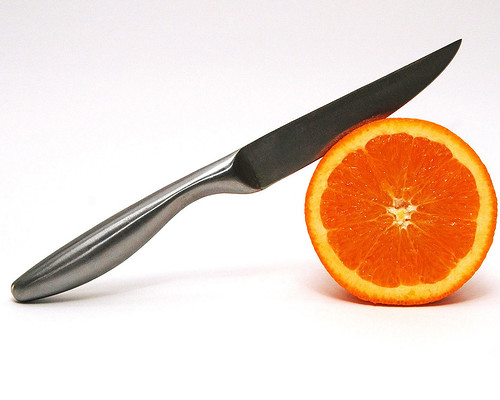
What is considered intelligent varies with culture. For example, when asked to sort, the Kpelle people (a tribal ethnic group in Liberia and southern Guinea ) take a functional approach. A Kpelle participant stated “the knife goes with the orange because it cuts it.” When asked how a fool would sort, they sorted linguistically, putting the knife with other implements and the orange with other foods, which is the style considered intelligent in other cultures.
Credit: Wikipedia: Glick (1975) reported in Resnick, L. (1976). The Nature of Intelligence. Hillsdale, New Jersey: Lawrence Erlbaum Associates.
Here’s what this has to do with my 4-year-old son with Down syndrome:
Because of his genetic anomaly, Trisomy 21, which means possessing three copies of the 21st chromosome instead of two, my son and others like him have been deemed “intellectually disabled.” Or, a term that is thankfully falling out of favor even in medical circles, mentally retarded.
To come to this conclusion, researchers and psychologists have administered IQ tests that by and large are incapable of accurately determining the true abilities of people with Down syndrome. There are a number of reasons why they aren’t completely accurate, even though they may be the best tools available. But the most obvious is that they fail to take into account that people with Down syndrome cannot often easily express to others all that they know, either linguistically or through other means of communication. Their receptive language skills (the ability to receive and process information) are typically much stronger than their expressive language skills (their ability to give back).
Copyright © jaya vijayan, via Flickr

