Showing posts with label blog. Show all posts

Wednesday, September 3, 2014

I’ll Take Mine with Down Syndrome, Please

This is not new.  Back in 2011, I wrote the blog post below in response to comments by a healthcare professional about aborting babies because they had Down syndrome. In July 2013, I wrote the blog “Taking Away the Down Syndrome” in response to the new research that says they may be able to shut down the extra chromosome.  It is my all time top blog in terms of readers. I don’t want to reinvent the wheel today though. I just want to post what I’ve already said. Rachel and others with Down syndrome are not afflicted. They are not broken. Research says that most people with Down syndrome are happy. Their siblings are happy. Their parents are happy. That doesn’t mean it is not hard. That doesn’t mean it isn’t exhausting. It is called living.
So here you go.
I’ll Take Her With Down Syndrome, Please
Reprinted from November 2011
This weekend we traveled to Little Rock to the Arkansas-Mississippi State football game. One of the highlights of fall for me is traveling to the Little Rock games where we spend a little time with my family and my sister, dad, Jonathan and I go to the games. It’s our tradition and I love it.  We ran into a good friend of ours, one we don’t see often but we have common ground way beyond football. She has invested 30 years of her life into children with disabilities. We have some great conversations.  She has a pure love for individuals with Down syndrome and other disabilities. She has a true respect and a beautiful grasp of what all of it means.  She was sharing about a family (no names involved) she had just met who had a baby with Down syndrome.  Apparently some of the early tests showed a high risk for Down syndrome.  A nurse told them the sex of the baby followed with a comment that they might not want to know this because if the test confirmed the “baby was a Downs, they would want to abort.”

Friday, March 14, 2014

Understanding Down syndrome – are we doing the right research?

by Sue Buckley from her blog at blog.SueBuckely.org
I recently had the honour of being invited to be a discussant at a symposium on Language, Reading and School Readiness in Down syndrome at the Gatlinburg conference on Research and Theory in Intellectual and Developmental disabilities (see http://kc.vanderbilt.edu/gatlinburg/program.html for program and abstracts). As my remarks were well received I decided to write them up for my blog and perhaps encourage some discussion. There were a number of interesting papers relevant to understanding learning and development in children with Down syndrome during the meeting and as I listened a number of questions emerged for me.
1. How relevant are ‘typical’ models of development?
For example, in trying to understand the challenges that face children with Down syndrome as they learn to read studies frequently compare the way that they learn and use component skills with ‘typically developing’ children matched for word reading ability. One repeated finding is that the children with Down syndrome are ‘behind’ in their understanding and use of phonics – the ability to sound out letters and blend them when faced with an unfamiliar word. However, they are often competent at reading exception words – using visual sight word learning strengths. I think we need to be cautious in the way we interpret these results – as there may be different ways to achieve an endpoint. Given the incidence of hearing impairments in early years and the difficulties of developing clear speech, we should not be surprised that children with Down syndrome are not well set up to hear or manipulate sounds in words in an aural mode as they begin to learn to read and rely more heavily on the visual route to word identification than the phonological recoding one. In my experience, by the time children with Down syndrome have word reading ages of about 8 years, they do begin to be able to sound out words to read them and to spell and they are helped in this by the visual representation of the sounds in letters and by building words with plastic letters i.e. they go from the visual to the phonological as they are exposed to activities with letters and printed words. I am using this example to caution against the view that the only or even the best way for children with a disability to learn to do something is the way most other children do it. It may be more productive to recognise that there are different ways to reach an endpoint and to actually encourage children to use their strengths and build skills in a different order.

Tuesday, September 3, 2013

Down Syndrome: The Measure of Intelligence

by Vicki Vila from Thoroughly Modern Messy:
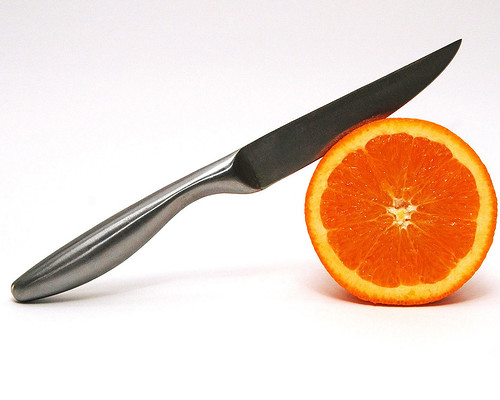
What is considered intelligent varies with culture. For example, when asked to sort, the Kpelle people (a tribal ethnic group in Liberia and southern Guinea ) take a functional approach. A Kpelle participant stated “the knife goes with the orange because it cuts it.” When asked how a fool would sort, they sorted linguistically, putting the knife with other implements and the orange with other foods, which is the style considered intelligent in other cultures.
            Credit: Wikipedia: Glick (1975) reported in Resnick, L. (1976). The Nature of Intelligence. Hillsdale, New Jersey: Lawrence Erlbaum Associates. 

Here’s what this has to do with my 4-year-old son with Down syndrome:

Because of his genetic anomaly, Trisomy 21, which means possessing three copies of the 21st chromosome instead of two, my son and others like him have been deemed “intellectually disabled.” Or, a term that is thankfully falling out of favor even in medical circles, mentally retarded.

To come to this conclusion, researchers and psychologists have administered IQ tests that by and large are incapable of accurately determining the true abilities of people with Down syndrome. There are a number of reasons why they aren’t completely accurate, even though they may be the best tools available. But the most obvious is that they fail to take into account that people with Down syndrome cannot often easily express to others all that they know, either linguistically or through other means of communication. Their receptive language skills (the ability to receive and process information) are typically much stronger than their expressive language skills (their ability to give back).
7348-4-orange_-_6 
Copyright © jaya vijayan, via Flickr

Tuesday, March 27, 2012

Preview Kelle Hampton's book "Bloom" release 4/3/2012

Love me. Love me. I'm not what you expected, but oh, please love me.

That was the most defining moment of my life. That was the beginning of my story.

From the outside looking in, Kelle Hampton had the perfect life: a beautiful two-year-old daughter, a loving husband, a thriving photography career, and great friends. When she learned she was pregnant with her second child, she and her husband, Brett, were ecstatic. Her pregnancy went smoothly and the ultrasounds showed a beautiful, healthy, high-kicking baby girl.

But when her new daughter was placed in her arms in the delivery room, Kelle knew instantly that something was wrong. Nella looked different than her two-year-old sister, Lainey, had at birth. As she watched friends and family celebrate with champagne toasts and endless photographs, a terrified Kelle was certain that Nella had Down syndrome—a fear her pediatrician soon confirmed. Yet gradually Kelle's fear and pain were vanquished by joy, as she embraced the realization that she had been chosen to experience an extraordinary and special gift.

With lyrical prose and gorgeous full-color photography, Bloom takes readers on a wondrous journey through Nella's first year of life—a gripping, hilarious, and intensely poignant trip of transformation in which a mother learns that perfection comes in all different shapes. It is a story about embracing life and really living it, of being fearless and accepting difference, of going beyond constricting definitions of beauty, and of the awesome power of perspective. As Kelle writes, "There is us. Our Family. We will embrace this beauty and make something of it. We will hold our precious gift and know that we are lucky."

Be the first to read Kelle Hampton's Bloom. Free viewing of Chapter One from Bookperk.

Kelle Hampton's Blog post on her book Bloom.

Watch the book trailer below, featuring Kelle’s photographs:


Amazon Reviews:
“In her tender and genuinely beautiful memoir, Kelle Hampton encourages us to not simply accept the unexpected circumstances of our lives, but to embrace them like the things we wished for all along.” (Matthew Logelin, New York Times bestselling author of Two Kisses for Maddy)

“Bloom is one of the most emotionally stirring books I’ve ever read…. This story is a reminder that perfect, when it comes to human beings, is such a relative (and irrelevant) term…and that a mother’s love for her child is a powerful, eternal, unshakable force.” (Ree Drummond, New York Times bestselling author of The Pioneer Woman Cooks)

“Kelle Hampton…reminds us that life may not always look pretty or perfect, but it is always beautiful…. She has indeed made of her life something ‘wild and precious’ and her book, like her two beautiful girls, is a bundle of joy. I finished it reluctantly and with a full heart.” (Claire Fontaine, national bestselling author of Come Back: A Mother and Daughter's Journey Through Hell and Back)

Saturday, January 14, 2012

More about Ryan Langston and other people with Down syndrome in the media


from The Boston Herald by Tenley Woodman:

Before last Tuesday, Ryan Langston was a 6-year-old boy with Down syndrome.

But after his modeling shots in a Target catalog went viral, he’s become a source of inspiration for families with children with disabilities.

“We are very happy and proud that Ryan is being such a wonderful face for kids with Down syndrome and we think he’s a great little ambassador,” Ryan’s mother, Amanda Langston, told the Herald last week from the family’s home in northern New Jersey.
The Langstons — Jim, Amanda and Ryan’s fraternal twin brother, Ian — said they have been overwhelmed with the outpouring of interest and support generated by Dallas-based daddy blogger Rick Smith’s post “Target Is ‘Down’ With Down Syndrome: 5 Things Target Said By Saying Nothing At All.”

Author of http://www.noahsdad.com/, a blog chronicling the life of his 11-month-old son with Down syndrome, Smith said traffic to the site was so heavy he had to get a new server to handle the scores of people posting words of encouragement and sharing stories about loved ones with the disorder on the comment board.

“It validates what we do,” Smith said.

Boston-area parents of children with Down syndrome are overjoyed with the response.

“I almost feel like it is a battle cry received,” said Wendy Agudelo, 42, of North Andover, mother to 6-year-old Abigail.

“With this ad campaign it says, ‘We see that these kids are just the same,’ ” Agudelo said.

Ryan isn’t the only child with Down syndrome making a splash in the modeling world.

Matthew Mammano, 11, of Holbrook, a model with Boston-based Model Club Inc., has appeared in Houghton Mifflin textbooks, special-needs toy catalogs and even on “Sesame Street.”

“He’s a ham. He loves it,” said his mom Michelle Santone. “I wish there was more work for these kids.”

Tim Ayers, director of Model Club, said the industry is becoming more inclusive, but still has a way to go.

“Boston is really conservative in what they do,” Ayers said. “Boston is kind of behind in their mentality in what they are looking for.”

Chelmsford mother Maura Fitzpatrick, 41, was rebuffed by a local agency when she tried to find work for her 9-year-old daughter, Amanda Russo, who has Down syndrome.

“They wrote me back and said they didn’t think there was a market for kids with disabilities. That sent me on a rampage,” Fitzpatrick said.

A Manhattan-based modeling group thought otherwise, and Amanda was chosen for a Parents magazine shoot.

“Toys R Us has always included handicapped kids in their print media. I wish we saw more of it,” Fitzpatrick said.

Tuesday, October 18, 2011

Down syndrome series on KPBS


from KPBS:

KPBS is kicking off a week-long series on Down syndrome. The topic was suggested to us by one of our listeners.

We'll hear from parents, discover available resources, find out why advocacy is so important and look at clinical trials underway right here in San Diego.

Today we're joined by San Diego parent Colette Cosky (San Diego mother of two, runs Downright Awesome blog) who learned her eight-month-old son Dexter had Down syndrome, right after his birth. .
Down Syndrome Series Overview: An indepth look at how families are making a difference, resources available and clinical trials underway right here in San Diego
  1. Monday: A San Diego parent shares her story.
  2. Tuesday: Growing Up With Down Syndrome
  3. Wednesday: Support, Resources and Early Intervention
  4. Thursday: Treatments and Clinical Trials, Policy In Play
Midday Edition airs weekdays at noon on KPBS Radio