Showing posts with label early intervention. Show all posts
Monday, May 19, 2014
Mother says state program gives comfort in raising child with Down syndrome
by Victor R. Martinez from The El Paso Times:
Gaby Escobar knows first hand how important the It-Takes-a-Village concept is.
In this case, "the village" consists of speech/language, occupational and physical therapists from Early Childhood Intervention — or ECI.
Escobar's two-year-old daughter Analuisa, who was born with Down syndrome, has been a part of the program since she was a few months old.
"I could not imagine raising her without this help," she said. "I'm very proud of the work all the team — the therapist, the family and Analuisa — have put in. I am very grateful for all the help and love that they have shown us. They have become our family."
ECI is a statewide program for families with children, birth to 3-years-old, with disabilities and developmental delays.
ECI supports families to help their children reach their potential through developmental services. Services are provided by a variety of local agencies and organizations across Texas.
"She has had a speech and language pathologist since she was born," Escobar said. "She can say about 17 words and 27 more in sign language. Her first words where 'papa.' She's in love with her papa."
Saturday, May 3, 2014
Down Syndrome children have high IQ, specialist says
DHA chief calls for the need to integrate them into mainstream
Dubai: The Dubai Health Authority (DHA) held a campaign to raise awareness about Down Syndrome at the Al Barsha primary health care centre last week.
Down Syndrome is a chromosomal condition, which affects physical and mental development. It is caused by the presence of an extra chromosome.
The event was inaugurated by Eisa Al Maidour, Director-General of the DHA. More than 30 families with children and adults with Down Syndrome took part in the programme.
In the UAE, one out of 319 babies have Down Syndrome. The World Health Organisation (WHO) estimates the incidence of Down Syndrome to between 1 in 750 live births worldwide.
“These awareness initiatives help people understand Down Syndrome better and provide an active platform for people dealing with Down Syndrome to raise their queries.”
Labels:
advocacy,
Down syndrome,
early intervention,
inclusion,
IQ,
mainstream,
therapy,
UAE
Tuesday, August 27, 2013
A Mother and Her Child in the World of Down Syndrome in Nepal
by Michael Rosenkrantz from The Huffington Post:
Dr. Lalita Joshi, a retired Br .Gen. of Nepal Army Medical Corps with strict principals, simple and honest is driven by a deep love for her son Ashish, born some 22 years ago with Down Syndrome. She married Dr. Prabhu Joshi, an anesthesiologist, in 1980 and their first son, Amit, was born in 1981. Amit completed his MBA in the US and is now working for an investment company in Nepal. In 1989 Lalita became an OB-GYN.
In 1991 their second son Ashish was born. For 14 days Ashish was in NICU before he was able to come home. He possessed some facial features of a child with Down Syndrome and although the family suspected something, there were no real issues. When Ashish was three the family went to Madras for an elder sister's renal transplant. At that time Ashish was tested and it was confirmed that he had Down Syndrome. Fortunately for the Joshi's, Ashish has been accepted by all family members who refer to him as Lakshan Kobacha or lucky child.
The most common type of Down Syndrome is called Trisomy 21, which accounts for about 95% of people affected. Ashish has a less common type, known as Mosaic, which is a milder form of Down Syndrome enabling him to function at a much higher level.
Thursday, June 13, 2013
DSR Episode #20: Current Challenges – Ages 2, 4 and 7
In this episode Jason, Mark and Rick each give an update on their child and the current challenges they are facing for their age category.
Dexter, the walking man!
Jason’s Dexter is two years old and is now walking. What a big milestone walking is! Go Dexter! Jason has been having trouble finding the right preschool for Dexter. Unfortunately they have had trouble with schools refusing Dexter based on his disability. Is that even legal? The worst one was the school that his older child attends. That school turned Dex down without even evaluating him. It seems that Jason and Colette have found a home for Dex now and it is working out, but it did bring them a lot of stress. So I guess Jason’s big challenges are now related to school, but walking was a big milestone that happens in the 2-3 yr range for our kiddos. Aren’t they cute when they just learn and they stumble around like drunks? I love that age.
Luke and the nerds
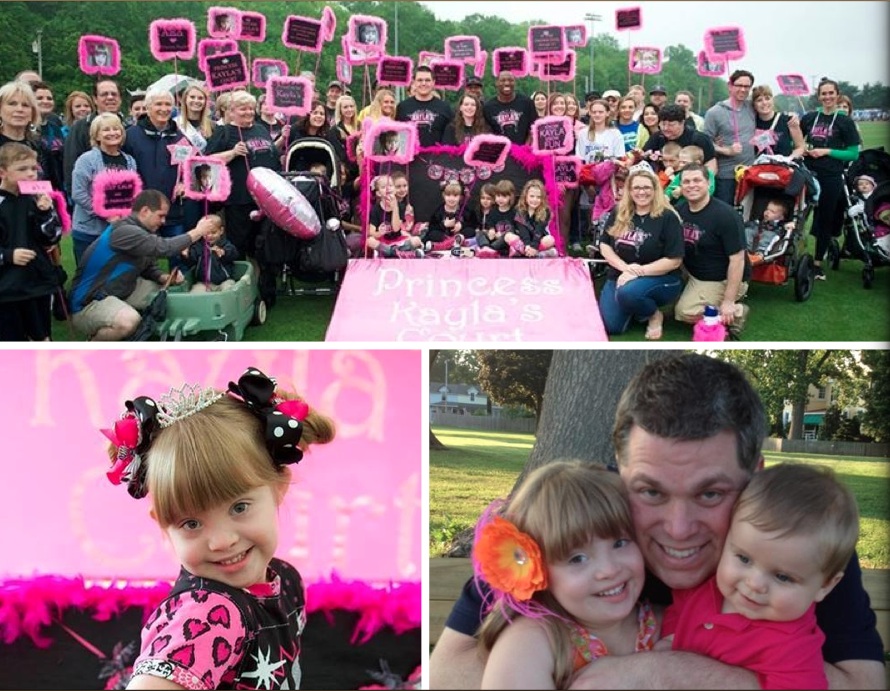
Kayla and her court
That’s our episode. Sorry for the hiatus. We had two postponements in a row. One by a guest and one that is all Mark’s fault. However we have some really great guests coming up so stay tuned!
We are the Down Right Awesome Dads and thanks again for listening!
~Mark~Download Down Syndrome Radio, Episode #20.
Better yet…subscribe, rate us and leave a comment on iTunes!
Labels:
challenges,
children,
dad,
Down syndrome,
DSR,
early intervention,
family,
father,
IEP,
podcast,
school,
therapy
Tuesday, December 11, 2012
teachmetotalk.com’s Christmas Therapy Guide is now for sale!
I’m launching a brand new feature here on teachmetotalk.com with the release of our very first Therapy Guide just in time for Christmas.
What’s a Therapy Guide?
teachmetotalk.com’s Therapy Guide consists of two components for helping you learn to work with a young child with a language delay or disorder.
First you’ll receive access to an instructive video. In this 50 minute video I’ll walk you through many, many ideas for using 6 different toys and activities based on holiday themes. I’ll teach you exactly what to say to engage a toddler or young preschooler, target new play and cognitive skills, and teach new language skills. I’ll discuss and demonstrate several activities for each toy providing practical application tips to increase your effectiveness and make sure you know what you’re doing!
You’ll also get a comprehensive written treatment plan (This one is 16 pages!) to pair with the activities demonstrated on the video. In the written guide you’ll find a list of suggested goals, materials, instructions, and strategies to make this a productive learning opportunity for both the child and you! Each activity lists 5 to 10 goals for targeting social, cognitive, both receptive and expressive language, and perhaps even speech intelligibility skills in very young children.
This information is appropriate for use by speech-language pathologists, committed parents and grandparents, occupational and developmental therapists, early intervention and preschool teachers, and other professionals who work with toddlers with language delays and developmental concerns.Like several of my other projects, the Christmas Therapy Guide is written in a homework format and may be copied and shared with families during sessions. It’s a fantastic parent and caregiver training tool for SLPs and other therapists who work in early intervention.
The Christmas Therapy Guide is $19.99.
To purchase now, select Christmas Therapy Guide from the product list by going to www.shop.teachmetotalk.com. PayPal is a payment option.
Tuesday, July 10, 2012
Twins with Down syndrome communicate with sign language while they learn to speak
by Hart Seely from The Post-Standard:
They received the news in the hospital, soon after the twins were born. They would never forget the words: Down syndrome.
“I said, ‘What will we do?’” the mother recalled. “And he just said, ‘We’ll love them, that’s all.’ And that was the answer.”
So it goes in the home of Trish and Tim Graham, where the meaning of life arrived on June 28, 2007, in the form of two tiny infants, swaddled in pink. The Liverpool couple are raising three children: Timmy, 8, and his sisters, 5-year-old Sophie and Sara, twins born with a genetic disability for which the only known remedy is a loving family.
For generations, children with Down syndrome faced an inability to speak, to ask for a glass of water or the time of day. Through early intervention school programs, the twins have learned a basic sign language, a hand-based vocabulary of essential words. They form sentences and talk to each other, bridging a gap that once could have meant a childhood of solitude.
In this learning process, they’re not alone.
“We knew we would need patience, and hopefully, we will have enough of it,” Trish Graham said recently. “But I think we’re stronger than we ever thought we were.”
The Grahams work for National Grid, both in the downtown Syracuse office, although Tim’s position often requires travel throughout the Northeast. They met in 1996, when he moved to Syracuse, and they married five years later. When their son, Timothy, arrived in 2003, they figured parenthood would follow a normal course. And when Trish became pregnant with twins, they braced themselves for challenges that, in retrospect, seem minor.
Down syndrome results from an extra copy of one human chromosome. Every year, the developmental disability affects about 5,000 newborns in the United States. A century ago, most would die before adolescence. Today, they survive to advanced ages and enjoy meaningful lives.
When her son was born with Down sdrome 22 years ago, Shari Bottego of Fayetteville was handed a book saying he would not live past age 10.
“I just closed it and said, ‘Get me a new book,’” recalled Bottego, who later founded the Down Syndrome Association of Central New York.
“Our son brought us a new perspective on what is important,” Bottego said. “He a bubbly, fun, caring person. ... If you ever met him, you wouldn’t forget him.”
Bottego said the toughest obstacle for Down syndrome families is often having to fight for their child with cash-strapped school districts that are looking for places to cut costs. Once a child is diagnosed, the parent’s world becomes a nonstop treadmill of tests, applications and paperwork. But the services become a lifeline.
“You pick your battles, and you learn,” Bottego said.
The Grahams speak of their children’s teachers and therapists with a reverence that extends beyond most family-school relationships. They say they’ve been blessed by an abundance of support from the community. The twins spend mornings at Main Street, a North Syracuse Early Education Program that serves 350 preschoolers, with and without disabilities. There, speech therapists teach sign and verbal cues.
“We have children who come here, and they are non-verbal, and later they are able to go into kindergarten, talking. Those are huge changes, and everybody can see that,” said Main Street language therapist Eileen Spillane-Healy. “But then there are the small accomplishments, like two kids using signs to express their thoughts. That’s how I measure success: Do we make changes in a child’s life?”
The act of speaking requires a dexterity that is especially difficult for children with Down syndrome. In recent months, the twins have increasingly showed signs of vocalizing. One day, when Tim picked up Sophie from the Gingerbread House, the daycare program where they spend afternoons, she said “Daddy,” clear as a bell. They viewed it a breakthrough. Another time, she called her sister’s name.
“It’s a glimmer of hope,” Trish said. “We’re building on it.”
The parents have learned sign language as well, but they always use words, encouraging the twins to speak.
“You tell them to get the dolly or the blanket, and they’ll get it,” Trish said. “Tim and I are learning as we go.”
The meaning of life. One day at a time.
“Sometimes, you’re just trying to get through the day,” Trish said. “He works full time. I work full time. It’s a lot of stress. It’s a lot of figuring out who’s going here, who’s going there. But we’ve been dealt this hand. All we can do is the best we can.”
“Look, this is not what defines us,” she said later. “Everyone has something going on. Some people take care of sick parents, some take care of sick husbands or wives. We have kids with special needs. That’s all.”
She looked at her husband and smiled. The girls were getting ready for bed.
“I used to say, ‘Wow, a kid with Down, that must be tough,’” Tim Graham said. “Now, I don’t feel sorry for them at all. I know how they love that kid, just as much as anyone else does.
“I think people think, ‘Oh, that must be devastating.’” he continued. “But you just roll up your sleeve, because you love your kids. You learn that what matters with your kid is not what they’re going to be. What matters is whether they will be happy. What matters is that they will love their lives.”
“We have the greatest kids in the world,” he said later. “And I think Trish said it perfectly: Everybody has something. We just happen to have two kids with special needs. These are our kids. This is our lives. We love it.”
Monday, September 19, 2011
Registration opens for Down Syndrome Education Conference in Charlotte, NC, USA
from Down Syndrome Education International:
Registration is now open for the Down Syndrome Education Conference being held in Charlotte, North Carolina on October 20-22, 2011, hosted by the The Down Syndrome Association of Charlotte.
We are presenting a Down Syndrome Education Conference in Charlotte, North Carolina, on October 20-22, 2011, organised and hosted by The Down Syndrome Association of Charlotte. The event is being held at The Blake Hotel in Charlotte.
DSE speakers, including Professor Sue Buckley and Dr Kelly Burgoyne will be presenting in-depth (two day) tracks covering early intervention and early years education, elementary education, and speech and language therapy (October 20-21), and essentials (one day) tracks covering early intervention and early years education, elementary education, and high school education.
Friday, August 19, 2011
$30,000 grant to STAR, Inc., Lighting the Way
from Stamford Plus:
The United Way of Coastal Fairfield County has provided a $30,000 grant to STAR, Inc., Lighting the Way… Funds will go to STAR's Birth to Three Services offered at the STAR Rubino Family Center located in Norwalk. Rubino Family Center provides early intervention services designed for children with developmental and health related needs including autism, Down syndrome, significant prematurity and other developmental delays.
"The work we are doing here is so important for families in Mid-Fairfield County. Statistics show that over 35% of the children who receive early intervention services are able to reach their developmental milestones by age three and not require further services. We are so grateful to the United Way of Coastal Fairfield County for their support that helps us continue our work within the community," said Barbara Fitzpatrick, Director of STAR Rubino Family Center.
STAR, Inc., Lighting the Way is a not–for-profit organization serving infants, children and adults with developmental disabilities, as well as providing support services to their families. We create opportunities for individuals to live full lives with independence, freedom of choice and personal growth by providing support, services and advocacy. We inform and encourage the community to recognize and appreciate the value of all individuals. For additional information about the Rubino Family Center at STAR, Inc., Lighting the Way call Director Barbara Fitzpatrick at 203-855-0634 or visit STAR's website at http://www.starinc-lightingtheway.org/.
The United Way of Coastal Fairfield County advances the common good by creating opportunities for a better life for all. They focus on the building blocks for a good life: quality education that leads to a stable job, enough income to support a family through retirement, and good health. To accomplish this, they energize and inspire people to make a difference; reflect the diversity of the communities we serve; act as leader and trusted partner in crafting human care strategies within and across our communities; increase investments in these strategies by expanding and diversifying development efforts and supporting the efforts of others; measure, communicate about, and learn from these efforts.
Subscribe to:
Posts (Atom)